

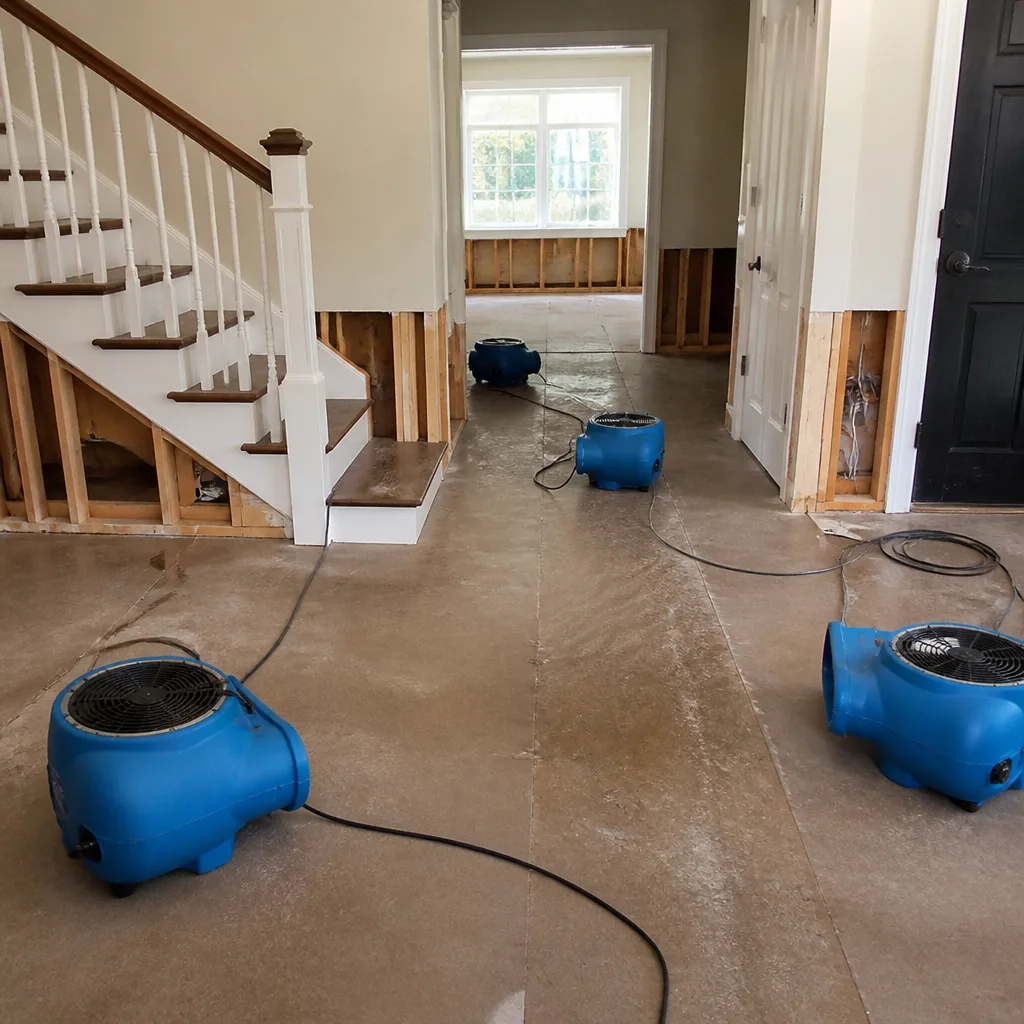
 Water damage drying
 Fire & smoke cleanup
 Mold remediation
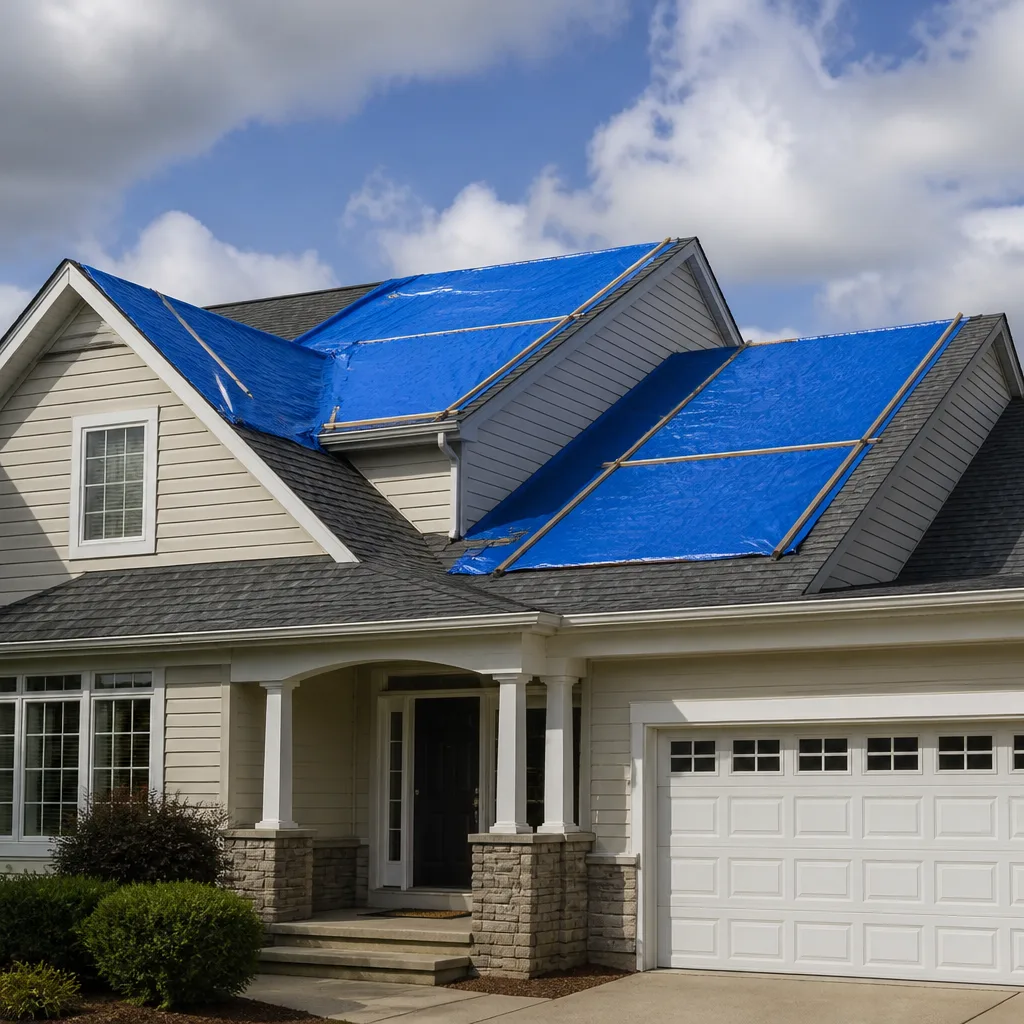 Storm response
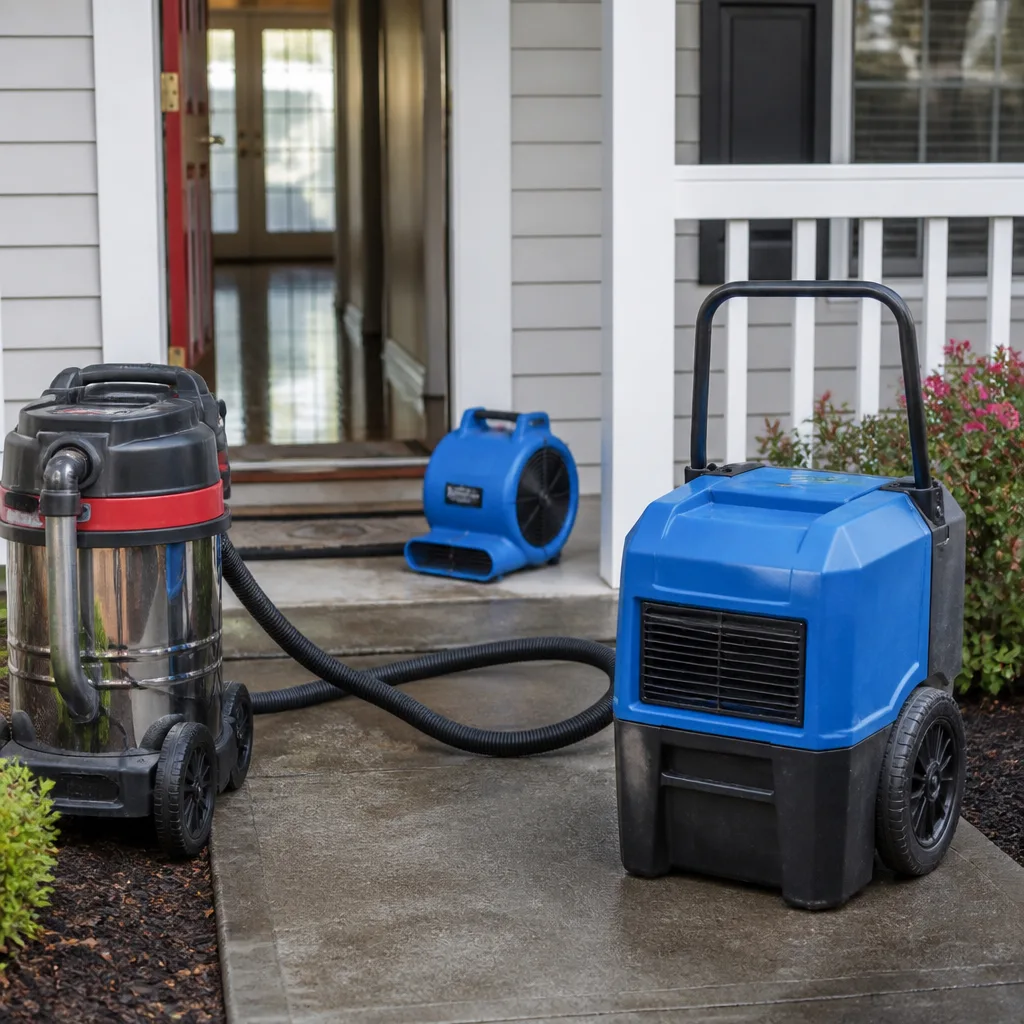 Sewage cleanup
 Reconstruction
Free visual inspection and a written scope of work before any mitigation begins - photos, moisture readings, and drying logs go in your claim file
The scope we write is the scope we bill. Anything new gets shown to you, in writing, before we touch it.
Get your free estimateFast, Reliable Storm Damage Restoration Across Sanford
A summer thunderstorm rolls through Sanford and in twenty minutes your finished ground floor is under two inches of water. The question every homeowner asks first is the same: what now, and how fast can someone actually get here? Marsh Water Damage Orlando answers live, 24 hours a day, at (850) 446-8938, and our crews serve Sanford directly from our Orlando dispatch center. We know the homes here. The 1920s bungalows off Park Avenue, the 1950s ranch houses with vented crawlspaces, the newer concrete-block subdivisions west of I-4. Storm water behaves differently in each of them, and that’s the local knowledge that changes how fast your house dries and whether mold ever gets started. This page walks through exactly what Sanford homeowners should expect from storm damage restoration, typical costs in this market, and the trust standard we bring to every door.
Why Marsh Water Damage Orlando Is Sanford’s Preferred Storm Damage Restoration Company
We’ve been restoring storm-damaged homes since 2005, and the call patterns in Sanford are as familiar to us as the neighborhoods themselves. Homeowners here call with the same story every June through September: a downpour hit at 4 p.m., the storm drains couldn’t keep up, and water found its way through a foundation crack or a failed cast-iron drain line. When that call comes from a Sanford address, the homeowner deserves to know who’s knocking. Our Threshold Verified protocol is built for exactly that. Before our technician arrives, you receive their name and photo. When they knock, they hold up a photo ID badge. Every single time. Behind that identity check stands a crew credentialed through IICRC, RIA, and IFA, running equipment from Dri-Eaz, Phoenix, XPOWER, B-Air, and Injectidry. Before any wet drywall comes out or a single fan gets set, you have a written price in your hands. That’s not optional for us. It’s printed on every work order, alongside a 365-Day Done Right Promise: if something isn’t right within a full year, we come back and make it right at no charge. Sanford homeowners get the same standard we’d bring to a large commercial loss, applied to their living room.
Restoration work we handle
Flood Cleanup in Sanford
Flood cleanup in Sanford means more than pumping out standing water. It means understanding what that water touched, what it soaked into, and what needs to come out before a restoration crew can honestly call the space dry. In Sanford’s older homes, the first call after a flood usually involves saturated carpet, swollen baseboards, and water that’s already wicked up into plaster walls. The second call is usually about the smell, because moisture trapped inside wall cavities in Florida humidity starts growing mold fast.
What the Job Actually Involves
Our team starts by mapping the water’s path with moisture meters and thermal imaging. Then we extract standing water, remove saturated materials that can’t be salvaged, set containment if contamination is present, and place drying equipment. In a typical Sanford flood cleanup, residential extraction runs between $1,200 and $2,800 before drying equipment is set, depending on how far the water traveled and what materials it saturated.
What Sanford Homeowners Need to Know First
If the water came from rain runoff or an overflowing storm drain, early action prevents a much larger problem. Sanford’s high year-round humidity means wet drywall and wet carpet start growing microbial growth within 48 hours. The sooner extraction starts, the more flooring and drywall can be saved. Call (850) 446-8938 and you’ll speak to a live person who can dispatch a Sanford crew the same day.
Flooded House in Sanford
A flooded house in Sanford is a different scope of damage than a single wet room. Water spreads through doorways, soaks through flooring assemblies, wicks up drywall, and finds its way into places you can’t see from the standing puddle. In Sanford’s slab-on-grade homes west of I-4, vinyl plank and laminate flooring will trap moisture against the concrete. In the historic district’s crawlspace homes, water pools under the floor system and wicks up through hardwood.
Drying an Entire Flooded House
A whole-house storm flood in Sanford typically runs $3,500 to $7,800 for extraction, containment, and structural drying, before any reconstruction. The range depends on square footage, number of affected rooms, and whether we’re dealing with clean storm water or something worse. In the Park Avenue historic district, a sewage backup from a cracked cast-iron drain changes the entire scope: category 3 water contains pathogens, and saturated materials must be removed and disposed of, not dried in place.
When Sanford’s Old Plumbing Makes a Flood Worse
We respond to a recurring scenario in Sanford’s older neighborhoods: a heavy summer downpour overwhelms a cast-iron drain line under the slab, the line cracks, and sewage backs up into the finished ground floor. That requires full containment, extraction with XPOWER pumps, anti-microbial treatment, and often slab excavation to get at the broken pipe. If your “flood” smells like sewage, tell the dispatcher when you call. It changes which crew and equipment we send.
Trusted Brands We Service in Sanford
Sanford homes run the full spectrum of flooring, drywall, and insulation products, and we’re equipped to dry all of them. Our crews operate Phoenix dehumidifiers for tight spaces and high-moisture loads, XPOWER air movers and pumps for extraction on slab floors and crawlspaces, and Injectidry systems for drying hardwood floors and wall cavities without full demolition. When our team shows up to a Sanford address, the equipment on the truck matches the job. No showing up with a shop vac and a plan. Every drying project gets the right tool for the material, whether that’s plaster over lathe in a 1923 bungalow or wet vinyl plank over concrete in a 2015 subdivision home.
See the difference
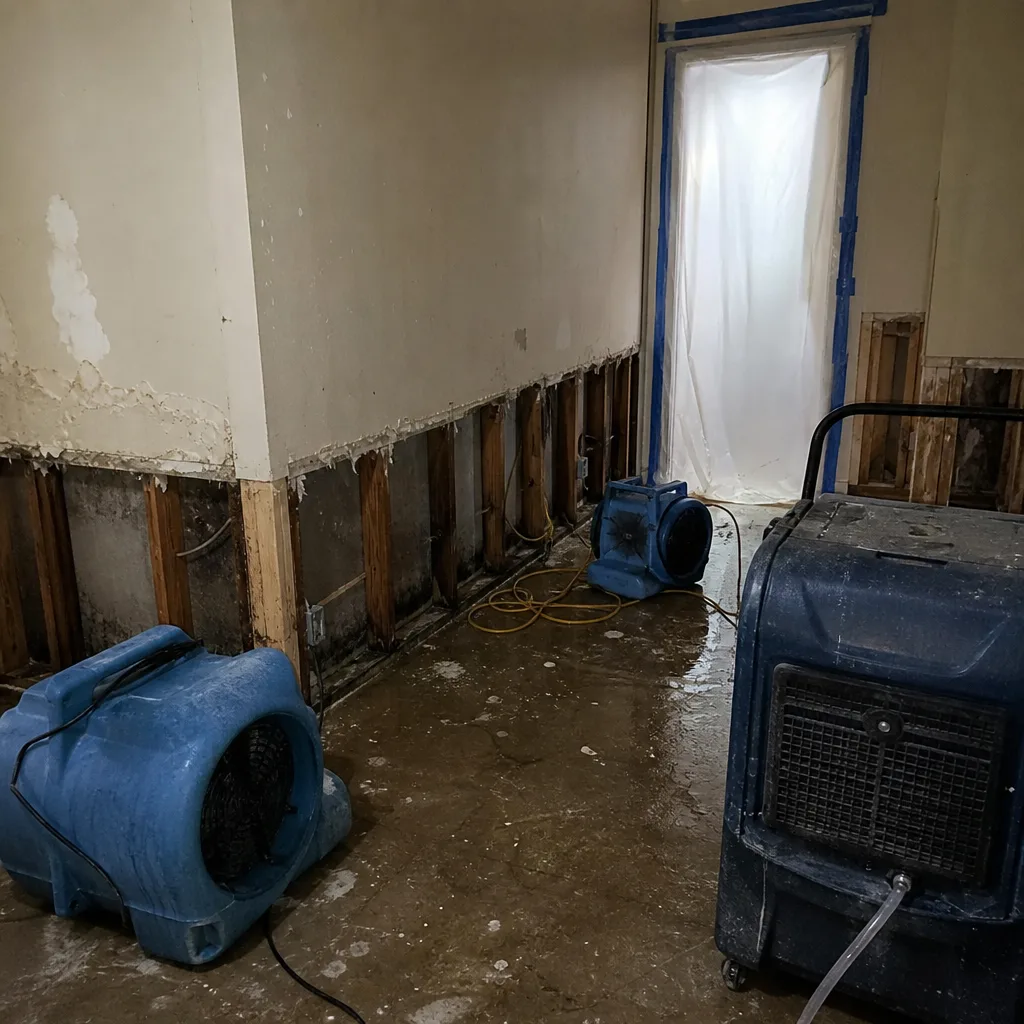 Before
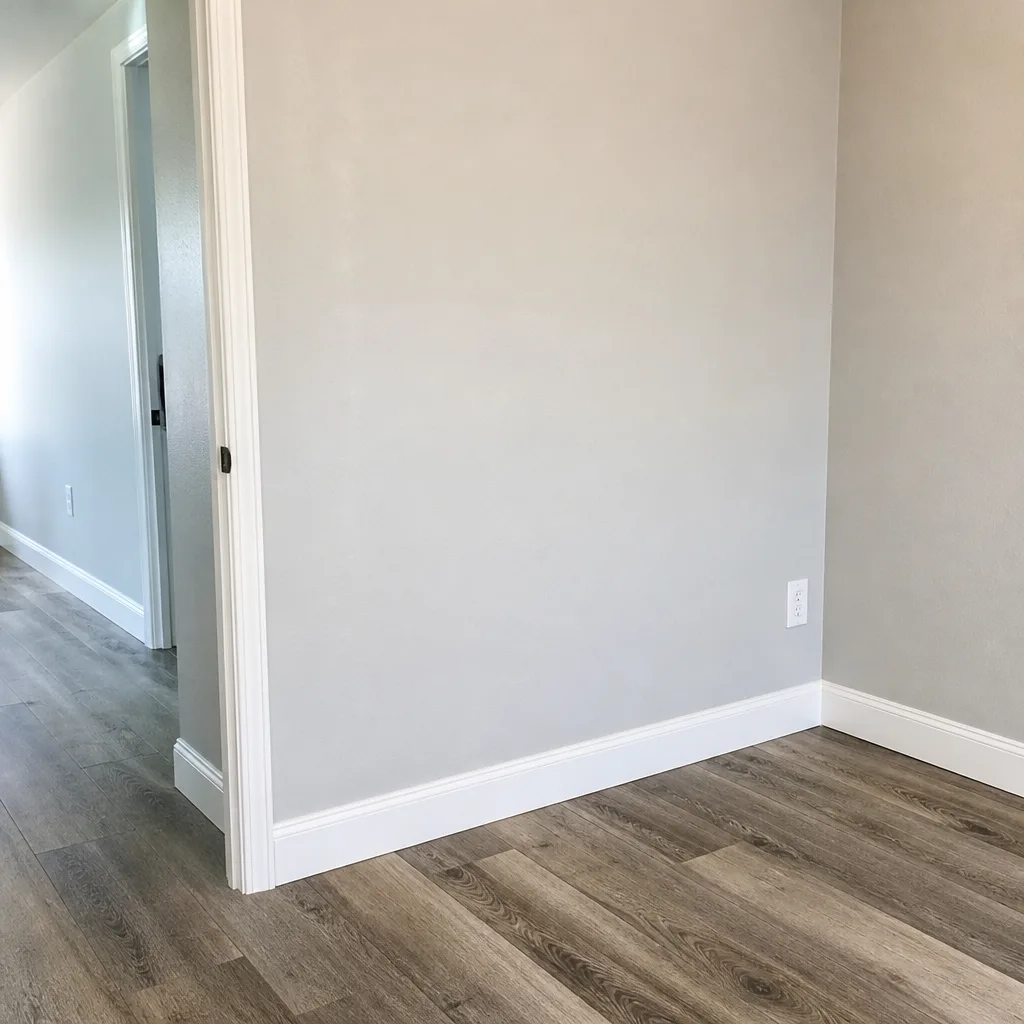 After
After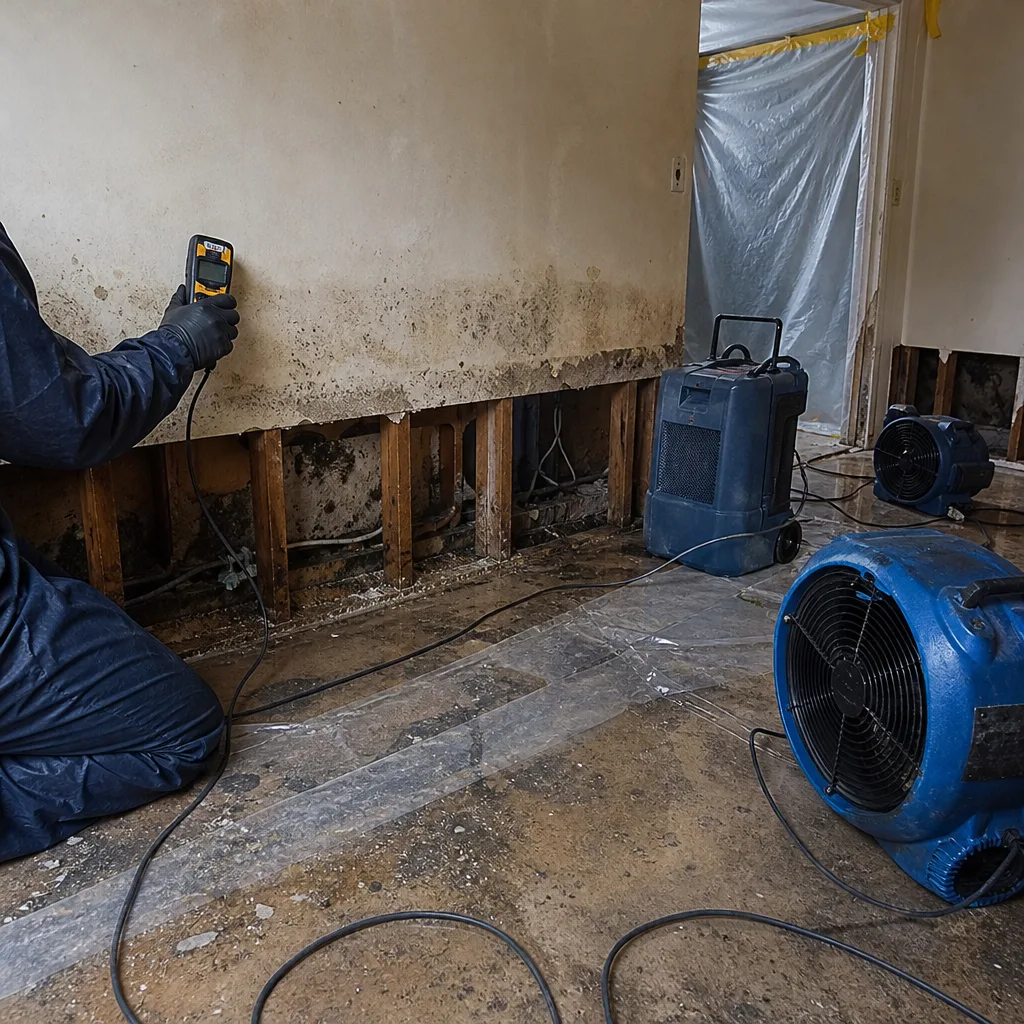 Before
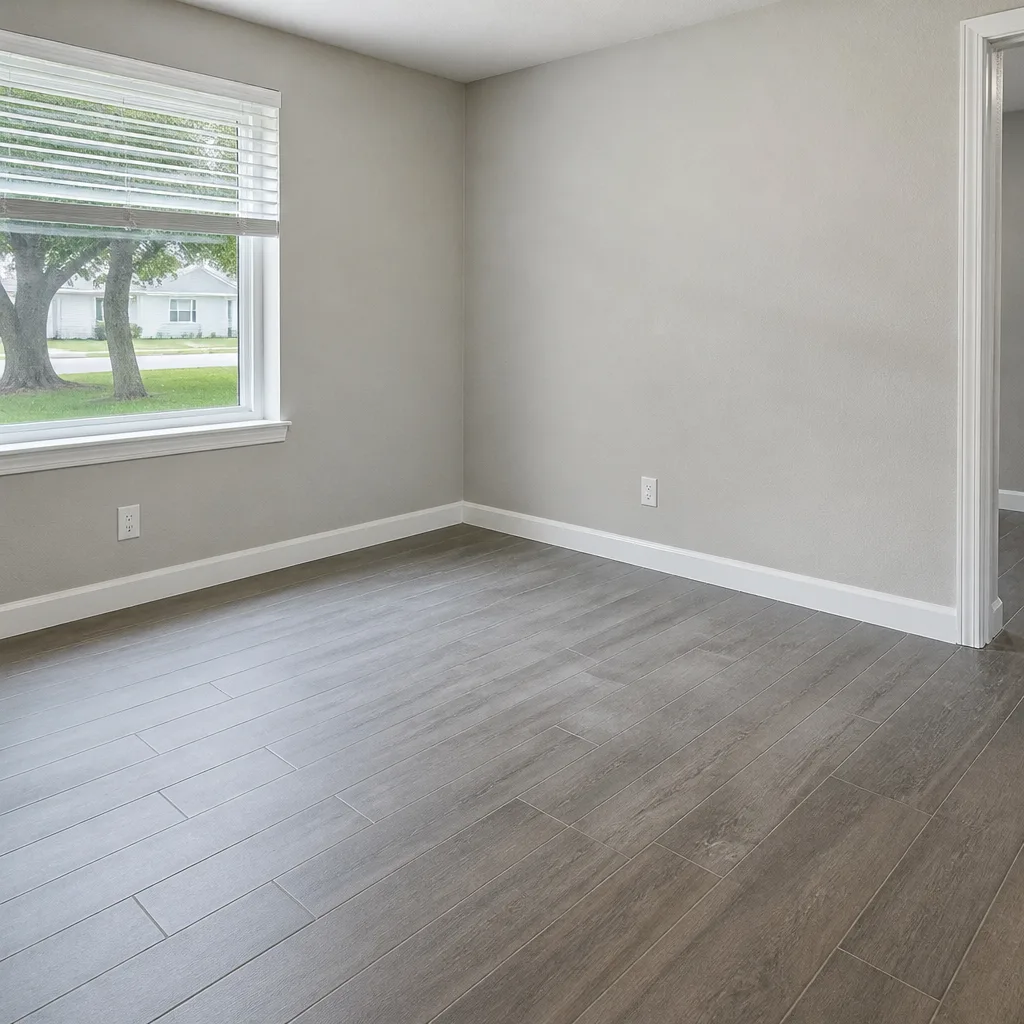 After
After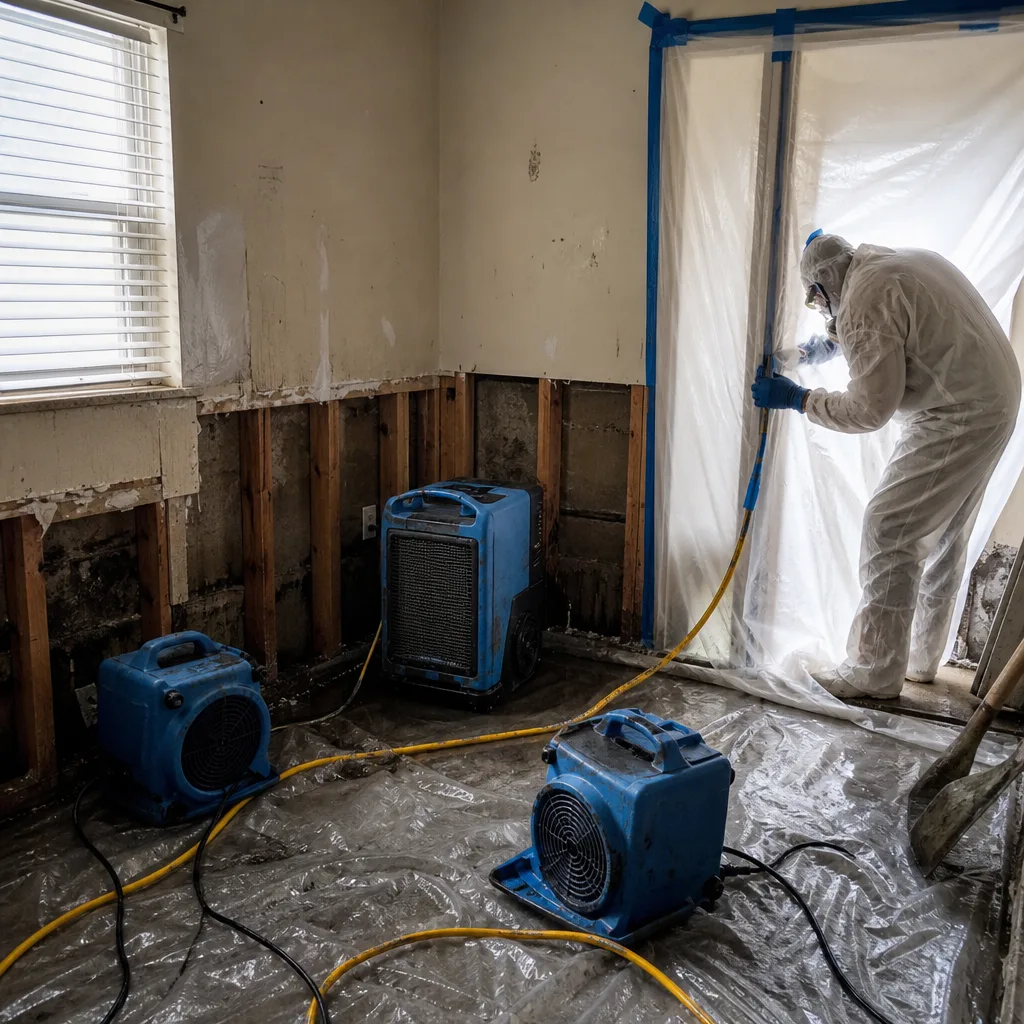 Before
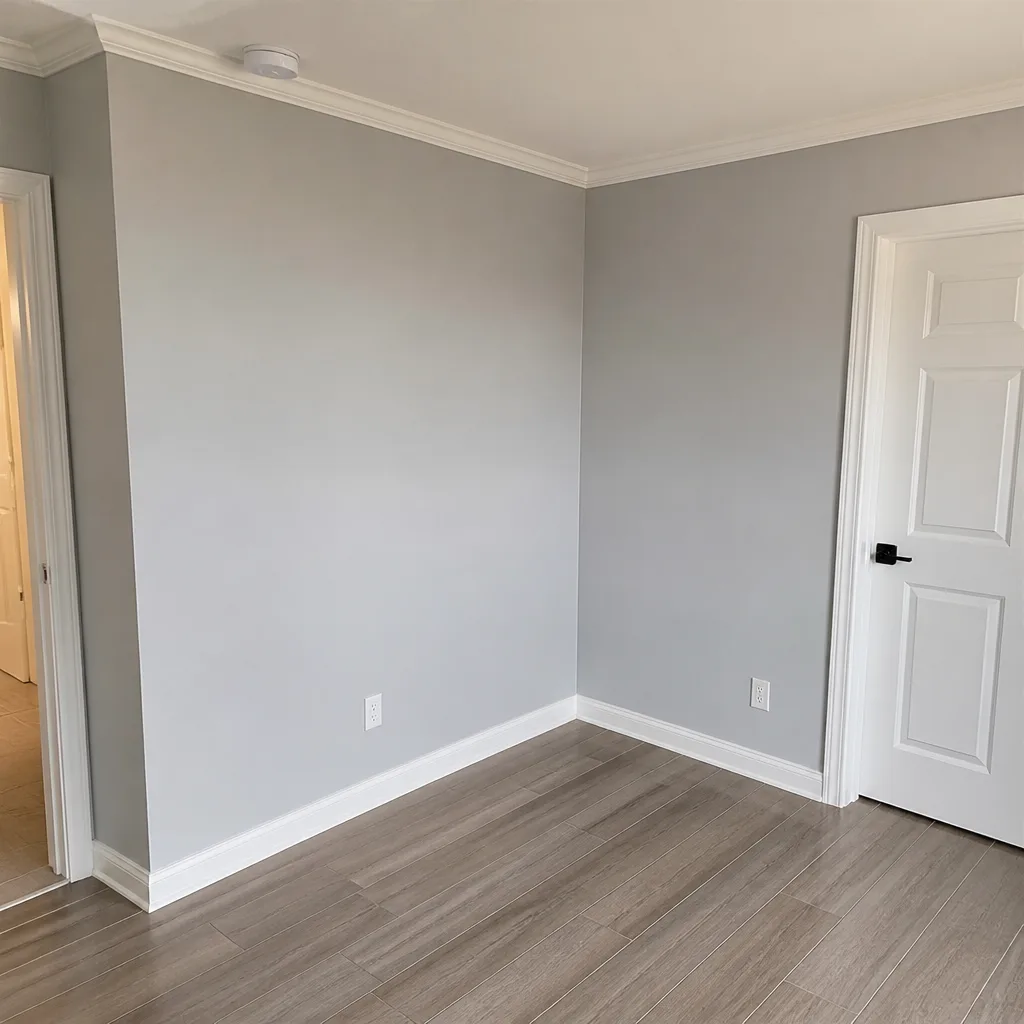 After
AfterCommon Storm Damage Restoration Problems We See in Sanford Homes
- Wet plaster-and-lath walls after roof leaks. Sanford’s historic homes hold water inside wall cavities far longer than modern drywall construction. Without dehumidification, not just air movement, that moisture migrates and feeds mold growth inside the wall.
- Cracked cast-iron drain lines under slab-on-grade floors. Heavy summer rainfall saturates the ground, shifting old cast-iron pipes until they crack. The resulting sewage backup floods finished ground floors in Park Avenue homes, requiring category 3 mitigation and contaminated material removal.
- Cupped hardwood floors over vented crawlspaces. In Sanford’s 1940s and 1950s homes, storm water entering a crawlspace raises humidity from below. Hardwood absorbs that moisture and cups within days. Drying the crawlspace alone isn’t enough. The floor system needs balanced dehumidification above and below.
- Trapped moisture under vinyl plank on concrete slabs. Newer homes west of I-4 often have vinyl plank flooring over concrete. Water seeps underneath through cracks, sits against the slab, and never dries on its own. That trapped moisture degrades the flooring and creates the conditions mold needs. We lift the plank, dry the slab, and test before reinstalling.
Pricing for Storm Damage Restoration in Sanford, FL
We Also Serve Cities Near Sanford
Our crews work throughout the Sanford area, so if you’re just down the road in Storm Damage Restoration coverage that extends to Lake Mary, Oviedo, Orange City, and Goldenrod, you get the same Threshold Verified technicians and the same written-price guarantee. If you’re in Sanford proper or any of these surrounding communities, one call to (850) 446-8938 dispatches the nearest available crew to your door.
Serving Sanford, FL - Our Local Coverage Area
We’re based in the Sanford area and know this community well. Use the map below to see our service coverage - if you’re nearby, we can almost certainly help.
FAQs About Storm Damage Restoration in Sanford
How quickly should I start storm damage restoration in Sanford to prevent mold?
You have roughly 48 hours in Sanford’s climate before standing water and saturated materials begin growing mold. Sanford’s humidity stays high year-round, so wet drywall, carpet, and plaster-soaked wall cavities are ideal mold environments almost immediately. Start extraction and drying within the first 24 hours to save the most flooring and drywall. Beyond 48 hours, you’ll likely be removing and replacing saturated materials rather than drying them. Call (850) 446-8938 and we can have a crew at your Sanford home today, with equipment running before the 48-hour mark passes.
Does Sanford’s old housing stock change how you handle storm water damage?
Yes, significantly. Homes in Sanford’s historic core are often brick and wood-frame, with plaster-and-lath walls and vented crawlspaces that hold and trap moisture differently than modern drywall. Those materials absorb water slowly and dry slowly, so we use different equipment settings, longer drying plans, and more invasive moisture testing. We don’t treat a 1920s Park Avenue bungalow the same way we treat a 2010s concrete-block home west of I-4. The materials dictate the plan. For an exact assessment of your home’s specific construction, call (850) 446-8938 and schedule a free inspection.
Can you dry a flooded basement-like ground floor in a Sanford historic home with cast-iron drains?
You cannot dry category 3 water in place, and that’s what a cracked cast-iron drain line produces. Sewage and stormwater mixed with sewage contains pathogens. The standard for that water, under IICRC guidance, is removal of contaminated materials, full antimicrobial treatment, and proper disposal. The damaged materials come out, the affected area gets contained and treated, and only then do we dry what remains. If your Park Avenue home floods after a heavy rain and there’s any sewage smell, call (850) 446-8938 and tell the live dispatcher you suspect category 3 water. We’ll send the right crew and set up containment before anything else.
After a summer thunderstorm, my hardwood floors over a crawlspace are cupping – what should I do?
Cupping means the underside of the floorboards has absorbed moisture from the crawlspace, expanding the wood faster than the top surface. Don’t sand it yet. The floor needs to be dried from below and above with controlled dehumidification, not just fans moving air around. In Sanford’s humidity, running air movers alone will wick more moisture up from the crawlspace and make the cupping worse. We use Dri-Eaz dehumidifiers and, where needed, Injectidry systems placed beneath the floor to pull moisture out evenly. Call (850) 446-8938 for a moisture assessment before any sanding or refinishing happens.
Does your storm damage restoration handle vinyl plank over concrete in Sanford’s newer subdivisions?
Yes, and it’s one of the most common call-outs we get from Sanford’s newer neighborhoods west of I-4. Vinyl plank looks dry from above even when moisture is trapped under it. The only way to know is to test the slab with moisture meters. If the slab is wet, the plank comes up, the slab gets dried with dehumidifiers and air movers, and we test until moisture readings return to acceptable levels before reinstalling or replacing the flooring. That prevents mold from forming under your flooring and saves you from a warranty-voiding problem later. Call (850) 446-8938 for a free moisture test if you suspect water went under your vinyl plank.
Written by Tobias Reyner, Owner at Marsh Water Damage Orlando, serving Sanford and surrounding communities since 2005.