
Last updated October 16, 2026
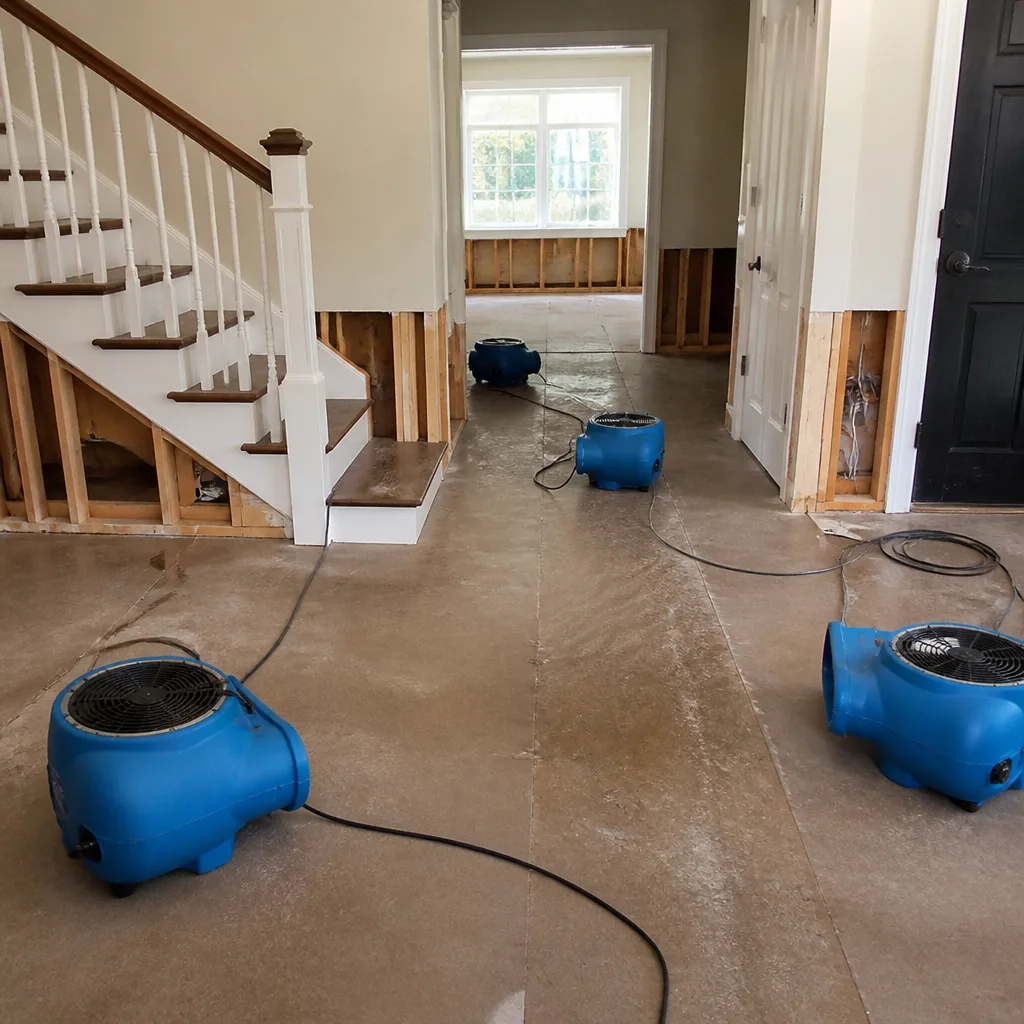 Water damage drying
 Fire & smoke cleanup
 Mold remediation
 Storm response
 Sewage cleanup
 Reconstruction
Free visual inspection and a written scope of work before any mitigation begins - photos, moisture readings, and drying logs go in your claim file
The scope we write is the scope we bill. Anything new gets shown to you, in writing, before we touch it.
Get your free estimateDamage Restoration Warning Signs: A Orlando Homeowner’s Reference Guide
In Orlando, a musty smell is not a warning sign. It is a confirmation. By the time your nose registers that damp, earthy odor, mold has already germinated, colonized, and begun digesting the paper face of your drywall. The subtropical humidity that makes our winters bearable is the same moisture load that collapses the margin of error inside your walls. A pinhole leak in a Minnesota home might evaporate before it causes visible staining. The same leak in an Orlando home feeds a fungal bloom within 48 to 72 hours because the ambient air never gets dry enough to arrest it. This guide and our more guides & resources exist because the damage you can see is almost never the whole story. The damage you cannot see is usually two to three times larger.
Restoration work we handle
Quick Answer
The earliest signs of hidden water damage in an Orlando home are not puddles or drips. They are: a persistent musty odor that gets stronger when the AC cycles on, white mineral staining on concrete block walls, buckled flooring that telegraphs moisture source and duration, ceiling stains in specific colors that indicate leak age, and rust or condensation on your air handler. If you notice any of these, call (850) 446-8938 for a free assessment. The damage behind the wall is almost always larger than the visible symptom, and Orlando’s humidity means it is actively spreading while you wait.
Table of Contents
- Efflorescence on Concrete Block: The White Deposits That Matter
- Flooring Tells: What Your Floors Are Trying to Say
- AC Warning Signs: Not an HVAC Problem, a Water Problem
- The Ceiling Stain Color Index: Yellow, Brown, and Gray
- Stucco Exterior Walls: Failure Modes Unique to Orlando
- Where Hidden Damage Hides in Orlando Homes
- Common Mistakes to Avoid
- When to Call a Professional
- Frequently Asked Questions
- The Bottom Line
Efflorescence on Concrete Block: The White Deposits That Matter
Walk the perimeter of your Orlando home and look at the concrete block walls. Most homes in this city sit on block foundations, and many have block exterior walls. If you see white, chalky streaks or crystalline patches, especially near the soil line or beneath window sills, that is efflorescence. It is not cosmetic. It is a mineral map.
Here is the science in plain terms. Concrete block is porous. Water from the ground or from a leak moves through the block’s capillaries. That water dissolves the salts naturally present in the concrete and mortar. When the water reaches the surface and evaporates, the salts stay behind as a white deposit. Every patch of efflorescence is a record of water movement through the wall. It means water has been inside your block, and it is still moving through it.
Reading the pattern tells you the source. A white band that runs horizontally along the bottom two feet of an interior block wall usually indicates rising damp from the slab or high ground moisture against the exterior. Efflorescence concentrated beneath a window, at the top corners of an exterior door, or beneath a wall vent points to a localized leak from flashing, caulk failure, or a window frame that has lost its water seal. Spotty efflorescence high on a wall suggests condensation, not groundwater.
What to Watch For on Orlando Block Walls
- White powder that reappears after you wipe it away – this indicates active moisture movement, not a one-time event from construction
- Hard, crusty white or gray deposits – good old-fashioned mineral accumulation; the wall has been wet for months
- Efflorescence paired with flaking paint or spalling block – the surface is actively being damaged; spalling means the block face itself is delaminating
- White deposits near a recently patched crack – the patch did not fix the water source; the wall is still leaking behind the repair
One note specific to Orlando’s climate: efflorescence here can be misread because our high humidity slows surface evaporation. In a dry climate, water migrates out of block quickly and leaves dramatic deposits. Here, evaporation happens slowly, so efflorescence can build insidiously over time and appear faint. A faint white bloom on an Orlando block wall has been forming longer than a dramatic deposit would in Arizona. Treat it with more suspicion, not less. The threshold question is always: where is the water coming from now? Find that answer before you paint over it, because paint will trap the moisture inside the block and accelerate spalling.
Flooring Tells: What Your Floors Are Trying to Say
Every flooring material fails in a signature way when it gets wet. The pattern of the failure tells you the moisture source, the duration of exposure, and whether you are looking at a subtle, slow leak or a fast event. In our 20 years of Water Damage Restoration in Orlando, the flooring conversation is where most homeowners first realize the problem is bigger than they thought.
Engineered hardwood buckles at the seams first, with the edges of individual planks lifting and creating a washboard feel underfoot. This happens because the core of engineered wood is typically plywood or fiberboard, and moisture causes the layers to swell unevenly. A localized buckle pattern, where only planks in one area lift, suggests a source underneath that area: a slab leak, a dishwasher supply line, or moisture wicking up from a saturated subfloor. A widespread buckle pattern across a whole room suggests high ambient humidity over a long period or a broad event like a supply line burst that saturated everything.
Solid hardwood telegraphs moisture differently. Planks cup, meaning the edges curl upward and the center of each plank dips. Cupping happens because the bottom of the plank absorbs moisture faster than the top, especially when the wood sits over a damp crawlspace or a slab that was not properly vapor-barriered. In an Orlando home with a slab foundation, cupped solid hardwood is usually a sign that moisture is coming up through the concrete. The slab itself is damp.
Vinyl plank rarely buckles from moisture alone, so when it does, you should assume the problem is underneath it, not on top. Vinyl planks lift when the subfloor swells or when trapped moisture creates enough hydrostatic pressure to push the planks apart. A raised seam between vinyl planks in a kitchen, bathroom, or laundry room points to a hidden leak below the flooring, often from a supply line or a failing toilet wax ring. The vinyl is just the messenger.
Reading Your Floor: A Quick Reference
- Identify the material. Engineered wood, solid wood, and vinyl plank all fail differently.
- Map the area. Is the damage in one spot, one room, or sprawling across multiple rooms?
- Feel the floor. A floor that is cool and damp to the touch at a specific spot is different from one that is uniformly warm and dry but buckled.
- Check the edges. Buckled edges on engineered wood indicate a fast event. Cupped edges on solid wood indicate slow, ongoing moisture. Raised seams on vinyl indicate trapped moisture below.
- Document before you demo. Take photos. Your insurance adjuster will want to see the pattern before any flooring is pulled up.
The most dangerous flooring issue in Orlando is not the visible buckle. It is the one that has not buckled yet but is sitting over a subfloor that has been wet for weeks. By the time engineered hardwood shows visible damage, the subfloor beneath it has been affected for weeks or months. Pulling one plank to look underneath is the single most informative thing you can do, and it is often the moment a homeowner realizes the scope has changed from “clean up” to “restoration”-a decision explored in our DIY vs Professional Damage Restoration: The Orlando Homeowner’s Decision Guide.
AC Warning Signs: Not an HVAC Problem, a Water Problem
Your air conditioner runs nearly year-round in Orlando. That means it moves enormous amounts of air through your home, and that air carries the microbial load of every hidden moisture problem you have. Your nose is often the first detector.
The tell-tale sign: a musty smell that comes and goes in sync with the AC cycle. When the blower kicks on, the odor appears. When the unit cycles off, the odor fades within an hour. That oscillation is not an HVAC problem. It is the fan circulation system pushing air across a wet surface somewhere in the ductwork, the air handler, or the wall cavity adjacent to the return plenum. The musty smell is the exhaust of mold metabolizing the moisture you have not found yet.
Rust on the air handler is another orphaned warning sign. Homeowners see rust on the metal cabinet of the indoor air handler unit, usually in the closet or the attic, and they file it under “old AC unit.” But the air handler should not rust. It sits inside a conditioned or semi-conditioned space, and if the cabinet is rusting, water is condensing on it, dripping on it, or sitting in the drain pan. A rusted air handler means water is present where it should not be, and in an Orlando attic in August, that water supports mold growth within days.
Inexplicably high indoor humidity is a third sign. Every homeowner knows what their hygrometer reads in July. If you notice the indoor humidity creeping above 60% and staying there even when the AC runs, and your thermostat is set correctly, something besides the weather is adding moisture to your indoor air. That something is usually a water source you cannot see: a leak inside a wall, a saturated subfloor, a duct leak pulling unconditioned attic air into the system, or a clogged condensate drain that is backing water into the unit.
None of these are HVAC problems. They are water problems that happen to be visible at the HVAC equipment. Fix the water source first, then clean or replace the affected HVAC components. If you send an HVAC tech first and they do not find a refrigerant or electrical issue, do not dismiss the symptom. The moisture is coming from somewhere else in the house, and it will keep feeding the musty smell until someone finds it. A Mold Remediation in Orlando assessment starts with exactly this kind of investigation: finding the moisture before treating the symptom.
The Ceiling Stain Color Index: Yellow, Brown, and Gray
Ceiling stains are the most common indoor warning sign in Orlando homes, and almost every homeowner misreads them. They look at a stain and ask, “Is this current or old?” The color answers that question with surprising reliability.
Brown stains are active or recently active leaks. Water from a roof leak, a plumbing leak, or an overflowing bathroom picks up tannins and minerals from wood framing, insulation, and drywall as it travels downward. When it pools on the ceiling surface and evaporates, those dissolved solids stay behind, and they are brown. A brown stain that is growing in diameter is leaking right now. A brown stain that is dry to the touch but has not changed size in weeks indicates a leak that stopped recently, within a few months at most.
Yellow stains are old leaks. The water has long since evaporated, and the remaining stain has oxidized. The color has shifted from brown to yellow over time. A yellow stain with no growth in size and no dampness is historical. It does not need repair unless the drywall is soft or sagging. A yellow stain that is slowly enlarging is a peculiar situation: the leak is small, intermittent, and old enough that the stain has aged while the leak is still adding small amounts of water. These are common with roof nails that leak only during heavy rain.
Gray stains are the ones to fear. Gray on a ceiling is usually not a stain at all. It is mold. Moisture has been present long enough for fungal colonization on the ceiling surface, and the gray or gray-green discoloration is the colony itself. Gray stains often appear in rings or irregular patches, and they tend to occur in areas with chronic condensation: around AC registers, at the junction of wall and ceiling in bathrooms with poor ventilation, or on ceilings below chronically damp attic spaces. A gray stain is not a water stain. It is a biological growth, and it requires both mold cleanup and the elimination of the moisture source.
How to Check a Ceiling Stain Without Opening the Ceiling
- Touch the stain. Use the back of your hand. Damp or cool means active moisture. Dry and warm could be old, but verify.
- Measure it. Mark the edges with pencil and check again in 48 hours. Growth means active leak.
- Look for companion symptoms. Peeling paint at the edges, soft drywall, or a musty odor near the stain all indicate ongoing activity.
- Check the source above. If the stain is on a top-floor ceiling, inspect the attic directly above it. If it is on a ground-floor ceiling, check the plumbing fixtures, supply lines, or drain lines in the room above.
- Do not paint over it. Paint seals the surface but not the leak or the mold on the back side of the drywall. The stain will return, usually bigger.
The biggest mistake we see in Orlando is homeowners living with yellow and gray ceiling stains because the leak “seems to have stopped.” The stain does not tell you whether the leak will return. It tells you where it was. In a city that gets afternoon thunderstorms six months of the year, a roof leak that seems to have stopped is just a roof leak that has not rained recently.
Stucco Exterior Walls: Failure Modes Unique to Orlando
Stucco is the dominant exterior finish on Orlando residential construction, and it fails in ways that most national water damage guides never mention because they are written for siding and brick houses. Stucco is a cement-based coating applied over a substrate, usually metal lath over wood framing or directly over concrete block. It is designed to repel water, but it is not waterproof, and in a climate with 50-plus inches of annual rainfall concentrated in intense afternoon downpours, water will find its way behind stucco through any gap, crack, or failed seal.
The most common failure point on Orlando stucco homes is the window and door perimeters. The joint where a window frame meets stucco is sealed with caulk, and Florida’s ultraviolet sun plus daily thermal expansion cycles destroy that caulk within years. Once the seal fails, wind-driven rain from our classic afternoon thunderstorms forces water behind the stucco. The water travels down the space between the stucco and the wood sheathing, and it soaks the framing before you ever see a stain on the interior wall.
Cracks in stucco are the exterior warning sign. Hairline cracks, thinner than a dime, are often benign surface checking from the original application. Cracks wider than a dime, especially diagonal cracks running from window or door corners, are structural and almost always water intrusion points. The afternoon thunderstorm pattern in Orlando is the trigger: a crack that stays dry during a light rain will leak during a 30-minute downpour with 40-mile-per-hour wind gusts. The leak is intermittent, which is exactly why homeowners dismiss it.
Dark staining or moss growth on stucco in shaded areas is a moisture signal. Stucco in full sun dries quickly. Stucco in a shaded alcove, beneath a roof overhang, or on the north-facing side of the house stays damp for hours after a rain, and organic growth takes hold. If you see green or dark patches on stucco that never fully dry, water is lingering on that surface, and over time it will work its way through the cement matrix. The fix is not just cleaning the surface. You need to find where the water is pooling and address the drainage or the overhang.
After a heavy Orlando storm, do a quick exterior walk. Look for water lines on the stucco surface that show where rain was driven, any new cracks, and any window or door caulk that appears pulled away from the frame. The cost of recaulking a window is measured in dollars. The cost of tearing out rotted framing behind a stucco wall is measured in thousands. Storm Damage Restoration in Orlando starts with exactly this exterior-to-interior moisture mapping.
Where Hidden Damage Hides in Orlando Homes
Some water damage announces itself. A burst pipe, a flooded laundry room, a storm that tears off shingles. Those events are hard to miss. The damage that concerns us most is the kind that develops quietly, behind finishes, inside cavities, and under flooring, for weeks or months before anyone notices. In Orlando, the physical environment makes hidden damage grow faster than in almost any other U.S. climate because warm temperatures and high humidity accelerate every biological process involved in decay.
Here is where hidden damage hides in an Orlando home, room by room:
The Kitchen
- Behind the dishwasher – the supply line and drain are hidden, and a slow drip soaks the cabinet base and the subfloor beneath
- Under the sink – the cabinet floor often hides black staining and swollen particle board beneath cleaning supplies
- Behind the refrigerator – the ice maker supply line is the single most common hidden leak source in Orlando kitchens
- Inside the toe kick space – water runs under cabinets and pools where no one ever looks
The Bathroom
- Around the toilet base – a failing wax ring lets water seep under vinyl flooring and into the subfloor without ever showing a visible puddle
- Inside the shower surround – failed grout or caulk lines let water soak the wall cavity behind the tile
- Behind the vanity – supply lines and drain fittings hidden in a cabinet that gets opened once a day at most
- At the tub-to-floor transition – water splashes over the tub edge and flows under the tub apron, soaking the subfloor in a spot that never dries
The Attic
- Around roof penetrations – plumbing vents, exhaust fans, and HVAC boot connections are the most common roof leak points in Orlando homes
- At the AC drain pan – a clogged condensate drain overflows into the attic insulation, and the water spreads horizontally before it breaches the ceiling
- Under valleys and roof-to-wall transitions – flashing failures let water travel along the underside of the roof deck, often appearing on a ceiling far from the actual penetration
The Garage and Laundry
- Behind the washing machine – the supply hoses and drain standpipe are hidden behind the largest appliance in the room
- At the garage floor-to-wall transition – water from a water heater leak runs along the slab and soaks the base of adjacent drywall
- Inside the water heater cabinet – slow tank corrosion drips into the pan, and the pan overflows quietly, saturating the surrounding framing
The unifying pattern in every one of these locations is concealment. Water damage in Orlando homes hides behind appliances, inside cabinets, under flooring, and above ceilings. It expands into the adjacent framing and drywall while remaining invisible from the living space. The best thing any homeowner can do is check these high-risk locations on a schedule, not just when something smells. Twice a year, pull the refrigerator out, empty the under-sink cabinet, check the water heater, and inspect the attic. The damage you find on a scheduled check is always smaller than the damage that finds you.
Common Mistakes to Avoid
- Waiting for the musty smell to go away on its own. Musty odors in Orlando homes do not fade; they get absorbed into fabrics and drywall, and they reappear with every humidity spike. The moisture source behind the odor is still there.
- Painting over ceiling stains or efflorescence. Paint seals the surface so the moisture stays trapped inside the drywall or block, which accelerates deterioration and mold growth. The stain will return, and the structural damage will be worse.
- Treating flooring buckles as a cosmetic issue. A buckled engineered wood floor is evidence of a moisture event, not a warping defect. If you replace the flooring without fixing the water source, the new floor will buckle too.
- Assuming AC musty smell means the ducts just need cleaning. The ducts may need cleaning, sure, but the musty odor is coming from mold, and mold needs moisture. If you clean the ducts without finding the water source, the smell returns within weeks.
- Checking for roof leaks only during rain. Orlando afternoon thunderstorms come daily in the summer, but the leak you check for during the storm only shows weather-driven intrusion. Slow plumbing leaks behind walls never show up on a rainy-day inspection.
- Believing a yellow ceiling stain is no longer a problem. Yellow indicates old water, not absent water. The source may be intermittent, like a flashing failure that leaks only in heavy wind-driven rain. Orlando gets that weather every summer.
- Ignoring stucco cracks because they are “just surface.” A crack wider than a dime is a water intrusion point. In an Orlando downpour, that crack funnels water directly into the wall cavity. The repair is cheaper than the rot that follows.
When to Call a Professional
You should call a restoration professional when any of these conditions are true: you see visible mold growth larger than a dinner plate, you smell a musty odor that you cannot source, your flooring is buckled or cupped and you cannot explain why, a ceiling stain is growing or appears gray, your air handler shows rust, or efflorescence is actively reappearing on block walls. These are not DIY situations. A professional uses moisture meters and thermal imaging cameras to map the extent of hidden damage before any demolition happens, and that map determines the scope of the repair. Without it, you are guessing. Marsh Water Damage Orlando offers free estimates throughout the Orlando area. Call (850) 446-8938 and we will tell you what we find, what it means, and what it costs to fix, in writing, before any work begins. Our technicians are IICRC, RIA, and IFA credentialed, and we use professional drying and extraction equipment from Dri-Eaz, Phoenix, XPOWER, B-Air, and Injectidry. Visit our Marsh Water Damage Orlando home page to learn more about the Threshold Verified standard and what it means for who shows up at your door.
Frequently Asked Questions
Mold germination begins within 24 to 48 hours after a water leak in Orlando’s subtropical climate, which is faster than in most U.S. regions because our ambient humidity keeps materials damp longer. The practical meaning is this: a leak that happened Tuesday afternoon has mold spores germinating by Thursday, even if you cannot see them yet. Call (850) 446-8938 as soon as you suspect a leak, and we will dry the affected area before the colony establishes itself.
Hidden water damage smells musty, earthy, or like damp socks, and in an Orlando home the odor is often most noticeable when the AC first kicks on because the blower circulates air across the wet surface. The smell may fade when the AC cycles off, which is why some homeowners dismiss it as “just humidity.” It is not. It is microbial growth metabolizing moisture, and it will get stronger.
Yes, you can do a basic visual inspection by checking behind appliances, under sinks, around toilets, in the attic, and at the base of exterior walls for staining, soft drywall, efflorescence, and musty odors. You cannot see inside wall cavities, and that is where the majority of Orlando hidden water damage resides. A professional moisture meter and thermal imaging camera reveal what is behind the drywall without cutting into it first, as detailed in our How to Hire a Damage Restoration Contractor in Orlando: A Step-by-Step Guide.
Most residential water extractions in the Orlando market run between $1,800 and $4,500 depending on the size of the affected area, the drying time required, and whether mold remediation or structural repairs are needed. A small contained leak might run under $1,500 if caught early. A slab leak under the kitchen with subfloor replacement can exceed $8,000. Marsh Water Damage Orlando provides a written price before any work starts, so the number does not move once demolition begins.
Homeowners insurance in Florida typically covers sudden and accidental water damage, like a burst pipe or an appliance supply line failure, but typically excludes gradual damage from long-term leaks, seepage, or lack of maintenance. The distinction matters enormously in Orlando because our hidden damage often develops slowly. We document every water loss with photo and moisture mapping evidence, and we work directly with insurance adjusters to support your claim. Call (850) 446-8938 and we will help you understand what your policy covers before you file.
Efflorescence is the mineral deposit left behind when water evaporates from a concrete block surface, and it means water has been moving through your block wall recently. In an Orlando home, even faint efflorescence indicates an active moisture source because our high humidity slows evaporation, so the mineral deposits build up over time. The concern is not the white stain itself. It is the water inside the block, which will eventually spall the concrete face and feed mold growth inside the wall.
The Bottom Line
In an Orlando home, hidden water damage is never just what you can see. The visible signs are the trailing edge of a problem that started days, weeks, or sometimes months earlier. Our climate gives mold a head start that colder regions do not, and it conceals moisture signals that would be obvious in a drier environment. The practical takeaway from this guide is to inspect your home systematically, trust your nose, read the material clues like efflorescence and flooring patterns, and act when the first sign appears, following a Seasonal Damage Restoration Care for Orlando: Year-Round Homeowner’s Guide. A professional assessment costs you nothing at Marsh Water Damage Orlando, but letting a hidden leak ride through another Orlando rainy season can add thousands to the eventual repair. The damage will not wait. Neither should you.
Written by Tobias Reyner, Owner at Marsh Water Damage Orlando, serving Orlando since 2005.
See the difference
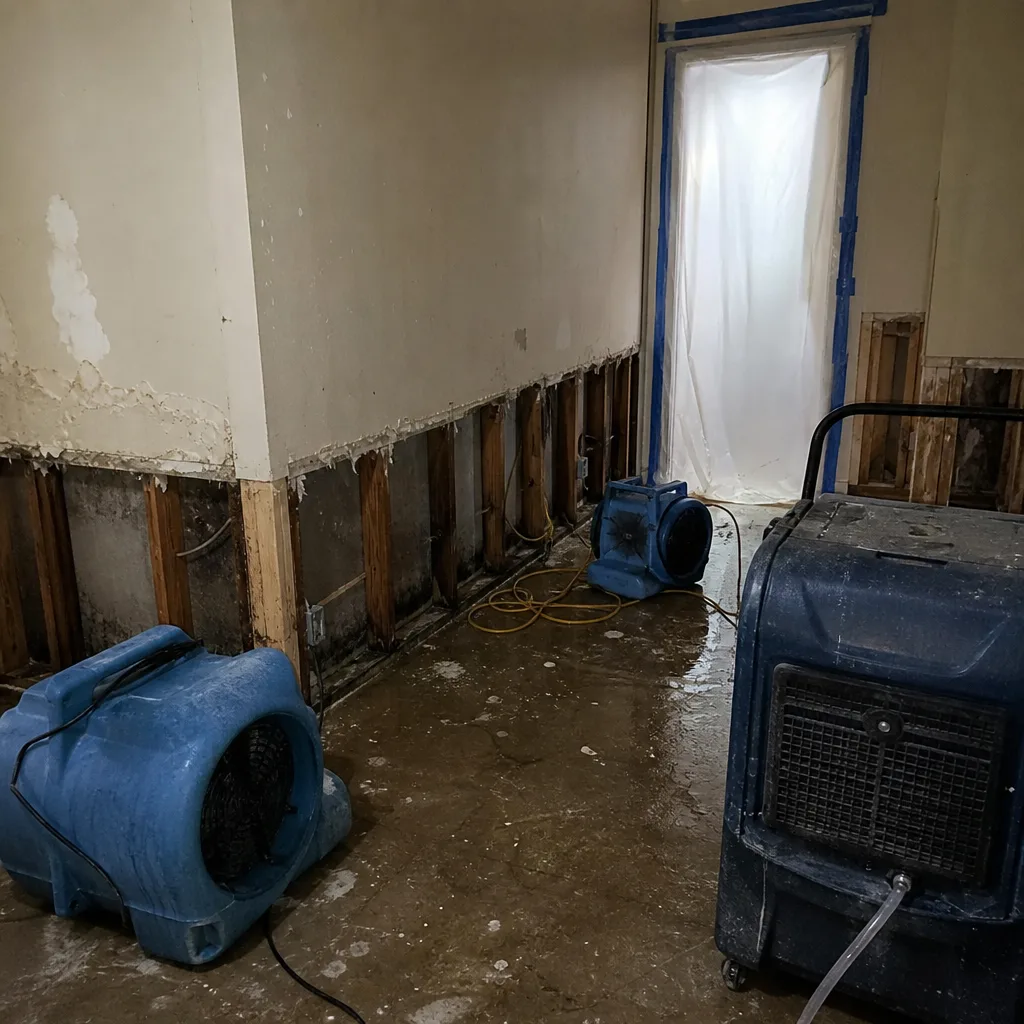 Before
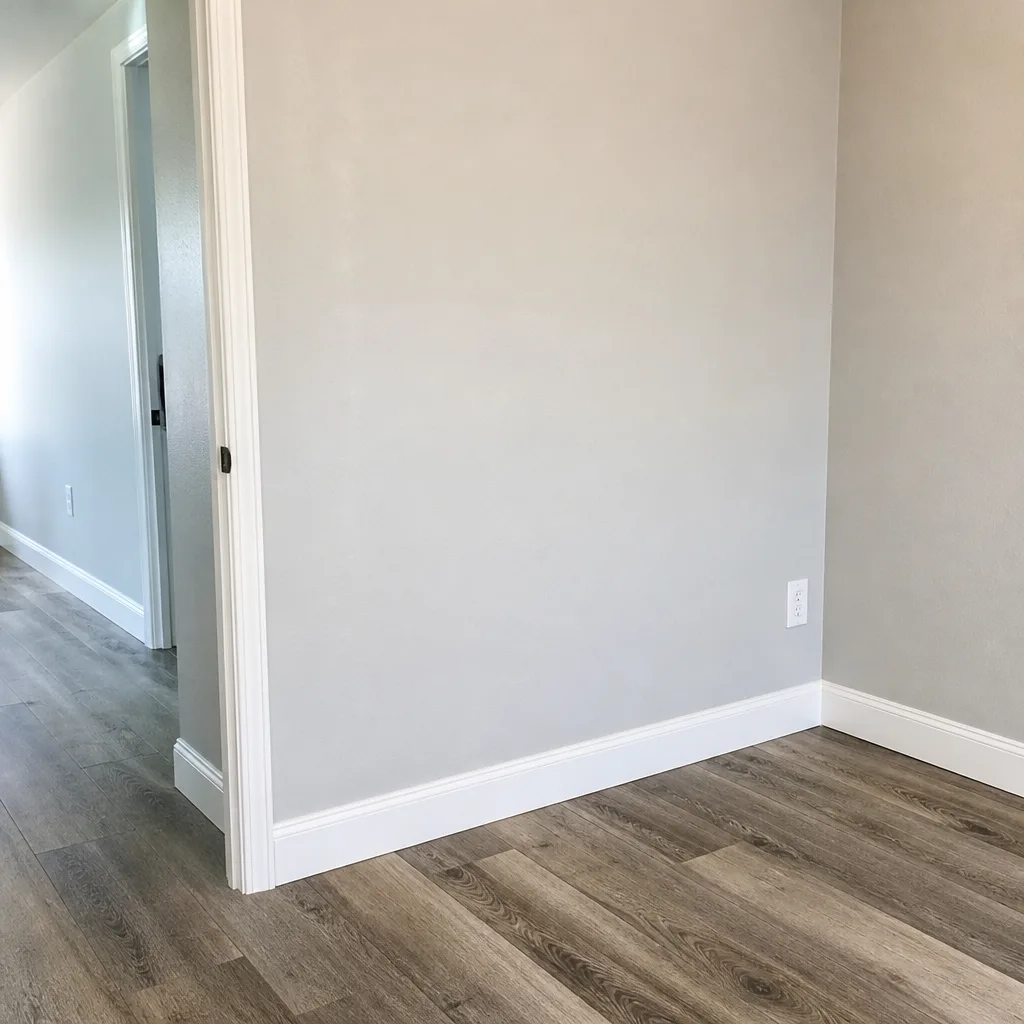 After
After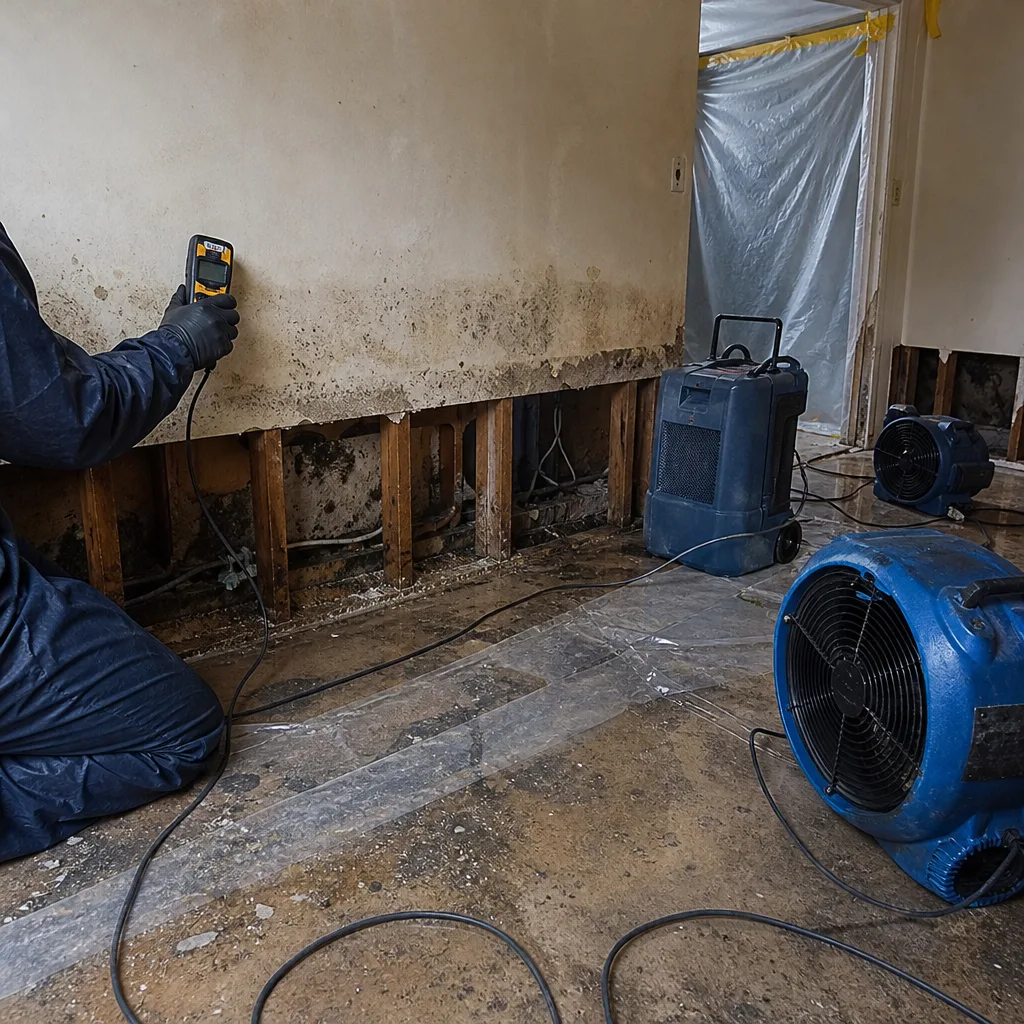 Before
 After
After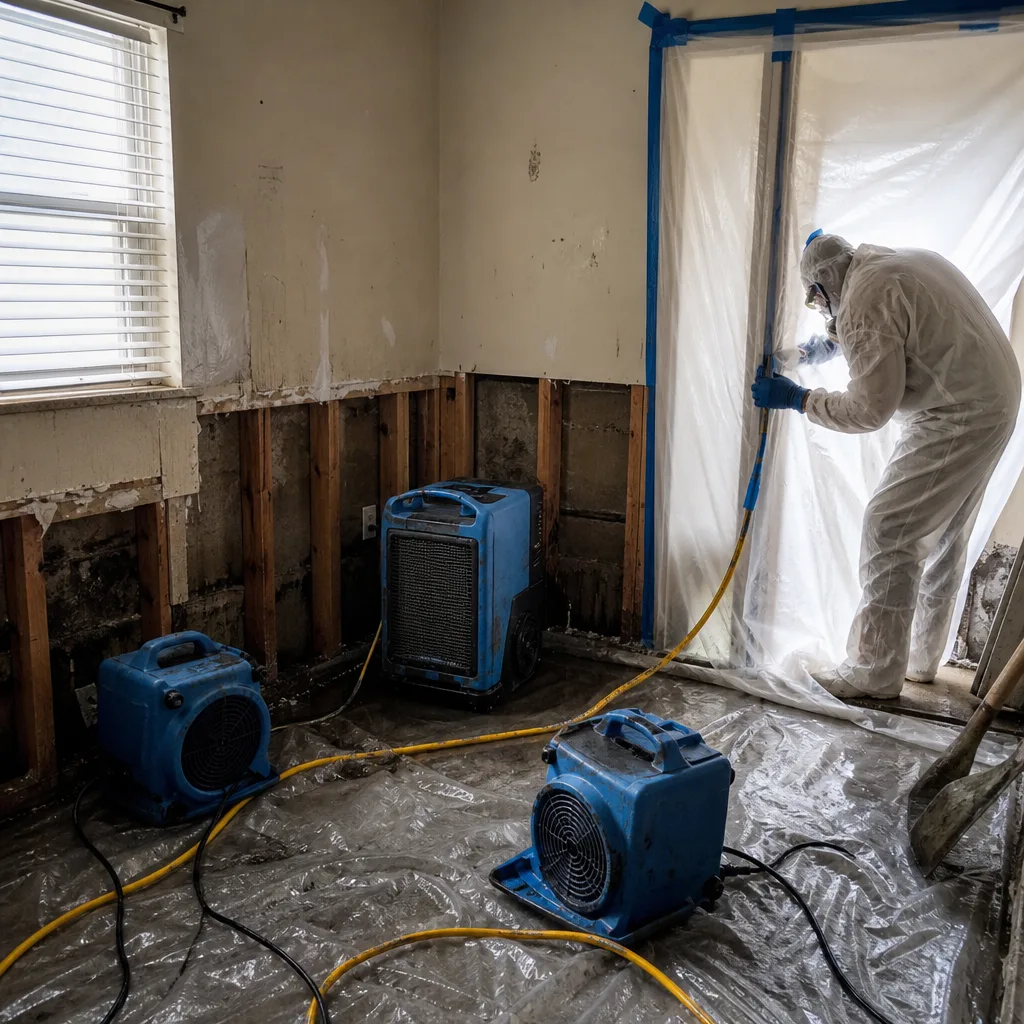 Before
 After
After