
Last updated October 16, 2026
 Water damage drying
 Fire & smoke cleanup
 Mold remediation
 Storm response
 Sewage cleanup
 Reconstruction
Free visual inspection and a written scope of work before any mitigation begins - photos, moisture readings, and drying logs go in your claim file
The scope we write is the scope we bill. Anything new gets shown to you, in writing, before we touch it.
Get your free estimateWater Damage Restoration Maintenance Checklist for Orlando Homeowners
A plumber replaces a failed supply line somewhere in Orlando every 8 to 12 minutes during peak summer months, and the line that lets go is almost never the one the homeowner was watching. It’s the one behind a toilet that hasn’t been touched since 2019, or the one feeding a refrigerator that’s been sitting in the same spot since the Bush administration. Here’s the uncomfortable truth: most water damage in this city doesn’t come from hurricanes. It comes from the slow, invisible failures that a generic maintenance checklist never mentions. A checklist that treats Orlando like Minneapolis with palm trees isn’t a maintenance plan. It’s a liability with a false sense of security attached. What follows is a checklist built around the specific ways water actually enters Orlando homes, the failure points our technicians see week after week, and the documentation habits that make a future insurance claim smoother. For professional help with active damage, see our Water Damage Restoration services.nce claim dramatically easier.
Quick Answer
A water damage prevention checklist for Orlando homeowners must prioritize five things: clearing AC condensate drain lines every 60 to 90 days (Orlando HVAC systems run 10 to 11 months a year and clogged drain pans are the city’s single most common non-storm water loss source), inspecting roof boots and penetrations before June 1 each year, identifying whether your home has polybutylene plumbing (common in Orange, Seminole, and Osceola County homes built before 1995), establishing a moisture baseline for your home’s walls and floors, and photographing every utility connection, shutoff valve, and current wall condition annually so any future claim starts with evidence rather than guesswork. For deeper reading, see The Complete Guide to Damage Restoration in Orlando.
Restoration work we handle
Table of Contents
- The AC Condensate Drain Line: Orlando’s Most Common Water Loss Source
- Roof Boots and Penetrations: The June 1 Deadline
- Polybutylene Pipes: How to Spot the Gray Plastic That Fails at Fittings
- Establishing a Moisture Baseline: The Number You Compare Against
- Slab Foundations and Grade: Why Orlando Slabs Hold Water Against Your Walls
- The Documentation Habit: Photograph Everything Before You Need It
- Seasonal Checklists: Orlando’s Two Real Seasons
The AC Condensate Drain Line: Orlando’s Most Common Water Loss Source
If you live in Orlando, your air conditioner runs more than it rests. Ten months out of the year, the system is pulling moisture out of humid air and sending it somewhere. That somewhere is a drain line, usually a PVC pipe running from the indoor air handler to a drain outside or a plumbing connection. When that line clogs, which it does constantly in a climate with this much biological growth, the water backs up into the drain pan under the air handler. The pan is shallow by design. It overflows, and then you have water running through your ceiling or down the inside of a wall, often for hours before anyone notices.
We handle a water loss from a clogged AC drain line in Orlando almost every week, and the pattern is always the same. The homeowner notices a water stain on the ceiling that wasn’t there the week before. By the time the stain is visible, the drywall has been wet for days. A $30 clearing job became a $3,000 to $5,000 drywall and drying project because nobody poured vinegar down a pipe every couple months.
Here’s the maintenance routine that actually works in this climate:
- Pour one cup of white vinegar into the drain line every 60 days during cooling season. Vinegar is not a miracle cure, but it slows the biological sludge that grows inside the pipe. Skip the bleach. Bleach corrodes PVC and gives a false sense of cleanliness.
- Every 90 days, check the drain pan under the indoor air handler. If there’s standing water in it, the line is partially or fully clogged. Address it that day, not next week. A partially clogged line can fill a pan in a single afternoon during July humidity.
- Know where the drain line exits your home. During peak cooling, you should see a slow trickle of water coming out. No water means no drainage, and that water is going somewhere else, like your ceiling joists.
- Install a float switch if your system doesn’t have one. This is a $50 to $100 part that shuts the AC off when the drain pan fills, preventing the overflow that causes most ceiling damage. If you’re not comfortable wiring it yourself, any licensed HVAC tech in Orlando can do it in under an hour.
This is the single highest-return maintenance task on this entire list. Clogged condensate lines cause more non-storm water damage in Orlando than any other single source, and the fix is nearly free if you catch it early.
Roof Boots and Penetrations: The June 1 Deadline
Every June 1, Storm Damage Restoration in Orlando shifts into a different gear. Hurricane season opens, and suddenly every roof leak becomes an emergency. But here’s what most homeowners miss: the roof failures that cause water damage during a storm are almost never caused by the storm. They’re caused by rubber boots and flashing that were already failing in May, and the storm just finished the job.
A roof boot is the rubber or neoprene collar that seals the gap where a pipe or vent penetrates your roof. Orlando’s sun destroys these things. The UV exposure is relentless, and the rubber dries, cracks, and separates from the pipe after six to eight years. When the first heavy rain of hurricane season hits, water follows the crack down the pipe and into your attic, where it can soak insulation and drywall for days before a stain appears on your ceiling.
The maintenance window that matters is April and May, not “annually” in some vague sense. Here’s the specific checklist:
- Schedule a roof inspection in April or May every year. Not June. June is when every roofer in Orange County is booked solid and every inspection is rushed. April gets you a thorough look and time to make repairs before the first tropical system forms.
- Check every roof penetration from the inside of your attic during daylight hours. Turn off the lights and look for pinholes of sunlight coming through around pipes, vent stacks, and the AC penetrations. If you can see light, water can follow the same path.
- Pay special attention to the AC equipment penetrations. Orlando homes often have refrigerant lines and electrical conduit running through the roof near the HVAC equipment. These penetrations are sealed with roof cement or mastic, and that sealant fails faster than the boots because of the vibration and heat cycling.
- Replace roof boots every 8 to 10 years even if they look okay from the ground. The failure starts on the bottom side where you can’t see it. If your home was reroofed more than eight years ago and the boots weren’t replaced at the same time, they’re on borrowed time.
The goal is simple: find the failure in April so the storm in August never finds it.
Polybutylene Pipes: How to Spot the Gray Plastic That Fails at Fittings
Orlando’s building boom from the late 1970s through the mid-1990s coincided with the peak of polybutylene plumbing, a gray plastic pipe that was installed in millions of American homes. It was cheap, it was flexible, and it had a fatal flaw: the pipe and the fittings degrade when exposed to chlorine and other oxidants in municipal water. The pipe doesn’t fail in the middle of a run. It fails at the fittings, the joints, the connections, which means the failure happens inside your walls, under your slab, behind your cabinets.
If your home was built before 1995 in Orange County, Seminole County, or Osceola County, you need to know whether you have this pipe. Here’s how to check:
- Look under sinks and behind toilets. Polybutylene is gray, sometimes blue or black, and typically 1/2 inch to 1 inch in diameter. It’s flexible, almost rubbery, and it’s marked with “PB2110” or “PB” along the side.
- Check the pipe where it enters the home, usually near the water heater or in the garage. If you see gray plastic connected to copper or PEX with a transition fitting, you have polybutylene somewhere in the system.
- Look at the fittings. Polybutylene uses either plastic or metal insert fittings held with copper crimp rings. The connection point is where the failure happens, and by the time you see evidence of a leak, the pipe has been failing for months.
Insurance companies know about polybutylene, and many homeowners insurance policies either exclude coverage or charge higher premiums for homes with this plumbing. The failure pattern is well documented, and the water damage from a polybutylene fitting failure is often catastrophic because the leak happens behind a wall or under a slab where it runs for days undetected.
If you find polybutylene in your Orlando home, the maintenance answer is not “wait and watch.” The pipe is a known liability, and the replacement cost, usually $4,000 to $8,000 depending on home size, is significantly less than the water damage claim you’ll file when a fitting fails at 2 a.m. on a Sunday. A full repipe to PEX or copper eliminates the risk entirely. This is one of those cases where the maintenance answer is actually replacement, because there is no repair that makes polybutylene safe.
Establishing a Moisture Baseline: The Number You Compare Against
When our technicians inspect a water-damaged Orlando home, they don’t start by looking for wet spots. They start by taking moisture readings from unaffected areas to establish what “normal” looks like for that specific structure. Every home has a baseline. Concrete slabs in Orlando hold moisture differently than wood subfloors. Exterior walls on the east side read differently than interior walls. Without a baseline, “wet” is just a guess.
Homeowners can do the same thing with a $30 to $60 pinless moisture meter from any hardware store. The process takes 20 minutes, and the data you collect becomes the reference point for every future water event. Here’s what a typical healthy Orlando home looks like:
- Interior drywall in air-conditioned space: 8 to 12 percent moisture content is normal. Below 8 is too dry, which happens when AC systems over-dehumidify, and above 15 suggests active moisture intrusion.
- Exterior walls: 10 to 15 percent is normal in Orlando’s humidity. These walls are closer to the outside environment and read slightly higher than interior walls.
- Concrete slab floors: Concrete is denser than wood and reads differently on a moisture meter. Most meters have a concrete setting, and 4 to 6 percent on that scale is normal for a slab with no active moisture source.
- Wood subfloors and framing: 10 to 14 percent is the healthy range. Wood above 20 percent supports mold growth, and wood above 28 percent is saturated.
Document your baseline readings on the same day you photograph your utility connections, which is covered in the next section. Write down the numbers for each room, or better yet, write them on the wall inside a closet door with a pencil. After any heavy rain event, any clogged drain overflow, or any plumbing repair, you can take new readings and compare them against the baseline. A jump of 5 percentage points in a wall that should be dry tells you something is happening behind that wall, even if you can’t see it yet.
This is the difference between catching a leak in its first hours and finding it after three weeks of hidden saturation. In our experience with Water Damage Restoration in Orlando, the homeowners who know their baselines call us on day one. The ones who don’t call us on day twenty-one, and the bill is three times higher.
Slab Foundations and Grade: Why Orlando Slabs Hold Water Against Your Walls
Most Orlando homes are built on concrete slab foundations, and the way those slabs interact with the surrounding grade is a uniquely Floridian problem. In a state with heavy rain, nearly zero elevation change, and soils that don’t drain well, the difference between a dry home and a flooded one often comes down to six inches of dirt slope.
A slab foundation sits directly on the ground. If the soil around the perimeter of the home slopes toward the house, which it does on thousands of Orlando properties, rainwater runs toward the foundation instead of away from it. The water pools against the slab, and concrete is not waterproof. It’s porous, and over time, water wicks up through the slab and into flooring, trim, and the bottom plates of interior walls.
Most homeowners never think about this until they pull up wet carpet after a heavy rain and find the concrete underneath is visibly dark with absorbed moisture. By that point, the problem has been ongoing for months or years.
Here’s the grade maintenance that matters for Orlando slab homes:
- Check the slope around your foundation annually, ideally in June right after the first big rains of the season. Walk the perimeter during a heavy rain if you can. Water should flow away from the house in all directions. If it pools against the foundation anywhere, that’s a problem.
- Look for soil that has settled or pulled away from the slab. Orlando’s sandy soil compacts over time, and a gap between the soil and the slab edge lets water run straight down to the footer. Fill these gaps with compacted soil, and slope the top layer away from the house.
- Keep the soil level at least 4 to 6 inches below the top of the slab. This prevents water from seeping over the top edge of the foundation during heavy downpours.
- Check your gutters and downspouts. Downspouts should discharge at least 4 feet from the foundation. A downspout that dumps water right at the corner of the home is pouring thousands of gallons against your slab every year.
This is the slowest-moving water damage on this checklist, but it’s also the most expensive to fix once it becomes visible. Mold behind baseboards, warped flooring, and crumbling drywall at the bottom of exterior walls are all signs that slab moisture has been migrating into the home for a long time. If you catch the grade issue early, the fix is a couple hours of moving dirt. If you miss it, the fix is a Mold Remediation in Orlando project that can run $2,000 to $8,000 depending on scope.
The Documentation Habit: Photograph Everything Before You Need It
Here’s a truth about water damage insurance claims: the homeowner who has documentation wins. The homeowner who doesn’t is asking an adjuster to take their word for it, and adjusters don’t take anyone’s word for anything. They look at evidence, and if the evidence doesn’t exist, the claim gets underpaid or denied. For a detailed look at potential costs, see our Damage Restoration Cost Breakdown: The Orlando Homeowner’s Reference for 2026.
Once a year, take 30 minutes and photograph these things:
- The water shutoff valve where the main line enters your home. When a pipe bursts, you need to know exactly where this is in the dark, in a panic, with water spraying. Photograph it. Know it.
- Every appliance connection behind toilets, under sinks, behind the washing machine, behind the refrigerator, under the dishwasher, and the water heater connections. These are the failure points, and having a photo of their current condition makes a future claim much easier.
- Current wall and ceiling conditions in every room, especially around windows, under AC vents, and along the baseboards. These photos establish what your home looked like before any water event, which is exactly what an adjuster will ask for.
- Your water heater, including the data plate showing its manufacture date and serial number. Water heaters have a lifespan, and Orlando’s hard water shortens it. A photo proves when it was installed if you ever need to demonstrate that the damage was sudden, not maintenance-related.
- Your electrical panel exterior, showing the door is firmly closed and sealed, and the interior breakers. Water and electricity don’t mix. Knowing which breaker feeds which room saves critical minutes when you need to kill power to a flooded area.
Store these photos in a folder called “Home Documentation Year X” in your cloud storage. Update it annually. It’s the cheapest insurance policy you’ll ever create, and when you need it, the 30 minutes you spent will feel like the best investment you ever made.
Seasonal Checklists: Orlando’s Two Real Seasons
Orlando doesn’t have four seasons. It has a long wet season from June through October and a shorter dry season from November through May. Your maintenance calendar should follow that reality, not the generic “spring and fall” advice that works for Minnesota.
Dry season checklist (November through May):
- Inspect roof boots and all penetrations in April or early May, before the rainy season arrives.
- Check the AC condensate drain line every 60 days, even during cooler months. Orlando systems run intermittently all winter.
- Check the grade around your foundation after the first heavy rain of the year.
- Complete your annual documentation photographs in January, when schedules are clear and you’re not competing with storm emergencies.
- Check under every sink and behind every toilet for signs of slow leaks, corrosion, or mineral buildup at fittings. Dry season is when hidden leaks become visible because they don’t get masked by rain.
- Inspect the caulking and sealant around windows, doors, and exterior penetrations. Orlando’s humidity breaks down sealant year-round, but repairs are easier when it’s dry.
Wet season checklist (June through October):
- Check the AC condensate drain line every 30 days. This is peak biological growth season, and clogs happen faster.
- Monitor your moisture baseline monthly. Heavy rains will push your exterior wall readings up, and you should know what’s normal for your home versus what suggests water is finding a new path inside.
- Walk the perimeter during or immediately after heavy rain events. Look for water pooling against the foundation, overflowing gutters, or downspouts that are no longer discharging properly.
- Look at your ceilings after every major storm. Fresh water stains, even faint ones, tell you water found a path into your attic or ceiling cavity.
- If a tropical system is forecast for Orlando, clear your gutters, check your downspouts, and take photos of your home’s condition before the storm arrives. Those pre-storm photos are gold during a claim.
Common Mistakes to Avoid
- Pouring bleach down the AC drain line. Bleach corrodes PVC pipes and can damage the air handler if it backs up. Use white vinegar instead, and use it regularly, not just when you remember.
- Checking the roof only after a leak appears. By the time water is visible on your ceiling, the damage inside the attic and wall cavity has been building for days or weeks. April inspections catch the failure before the rain does.
- Assuming “it’s just humidity” when you see condensation on windows or water stains on exterior walls. Orlando has real humidity, but water stains are not a humidity symptom. They’re a leak symptom. If the stain is new, find the source.
- Ignoring a slow drip under a sink because it’s “been doing that for months.” That slow drip is keeping the cabinet, the subfloor, and likely the baseplate of the wall wet. Mold growth starts within 48 hours, and what looks like a $2 washer replacement becomes a $3,000 remediation project.
- Not knowing where the main water shutoff is. Every minute you spend looking for the shutoff during a pipe burst is another couple gallons on your floor. Know where it is, know how to turn it, and practice once.
- Treating polybutylene pipes as a “wait and see” issue. The failure is not a question of if. It’s a question of when, and when it happens, it’s rarely a small leak. If you have the gray pipe, budget for a repipe.
- Believing that a home can’t flood because it’s never flooded before. Most Orlando homeowners who call us after a catastrophic water loss say the same thing: “We’ve lived here 15 years and never had a problem.” The failure point doesn’t care about your track record. It cares about age, wear, and corrosion.
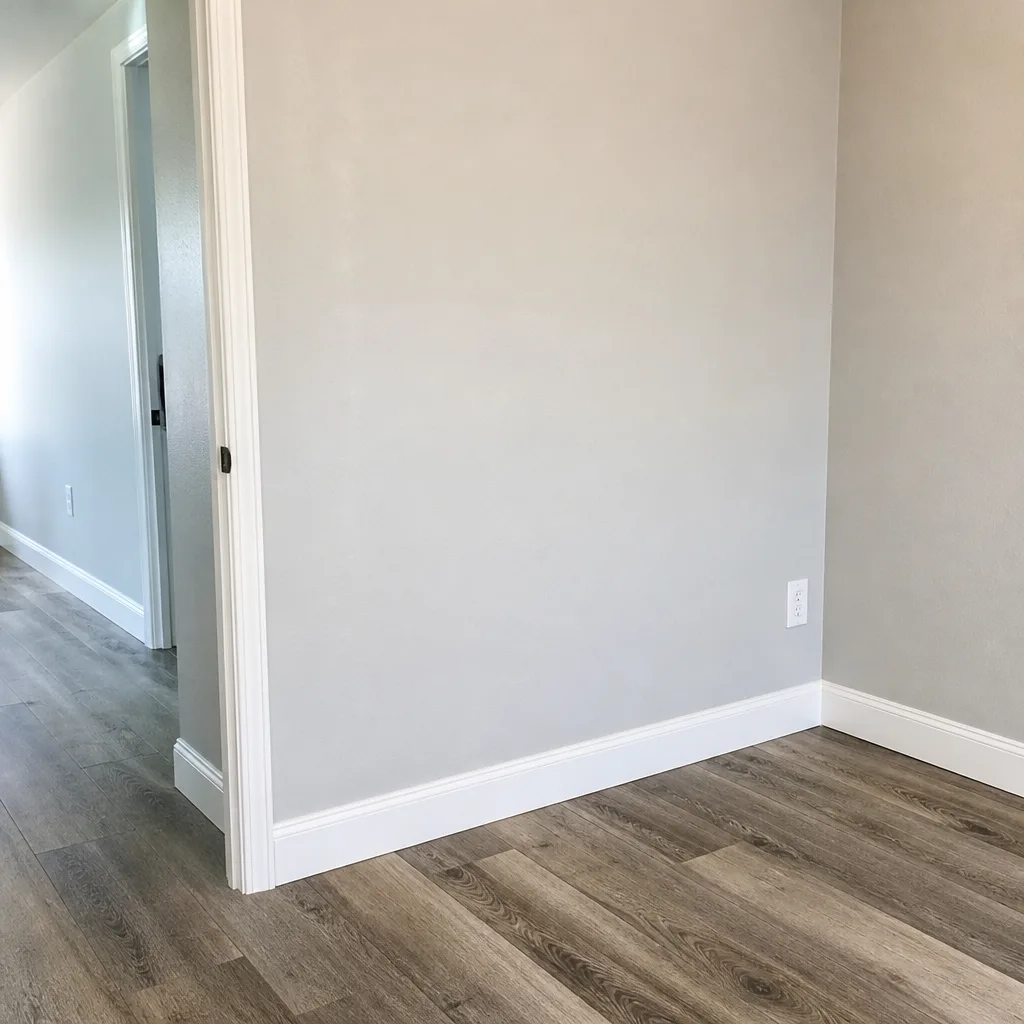
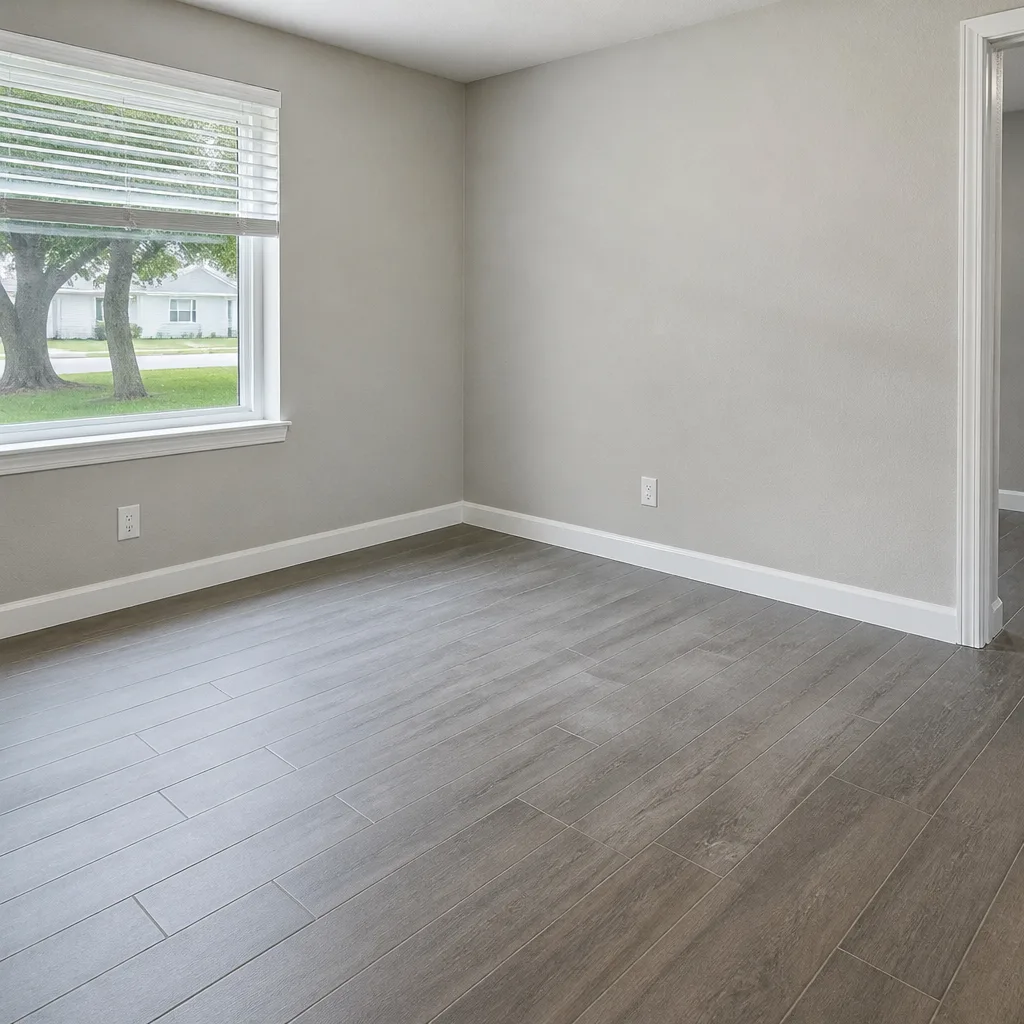
See the difference
 Before
 After
After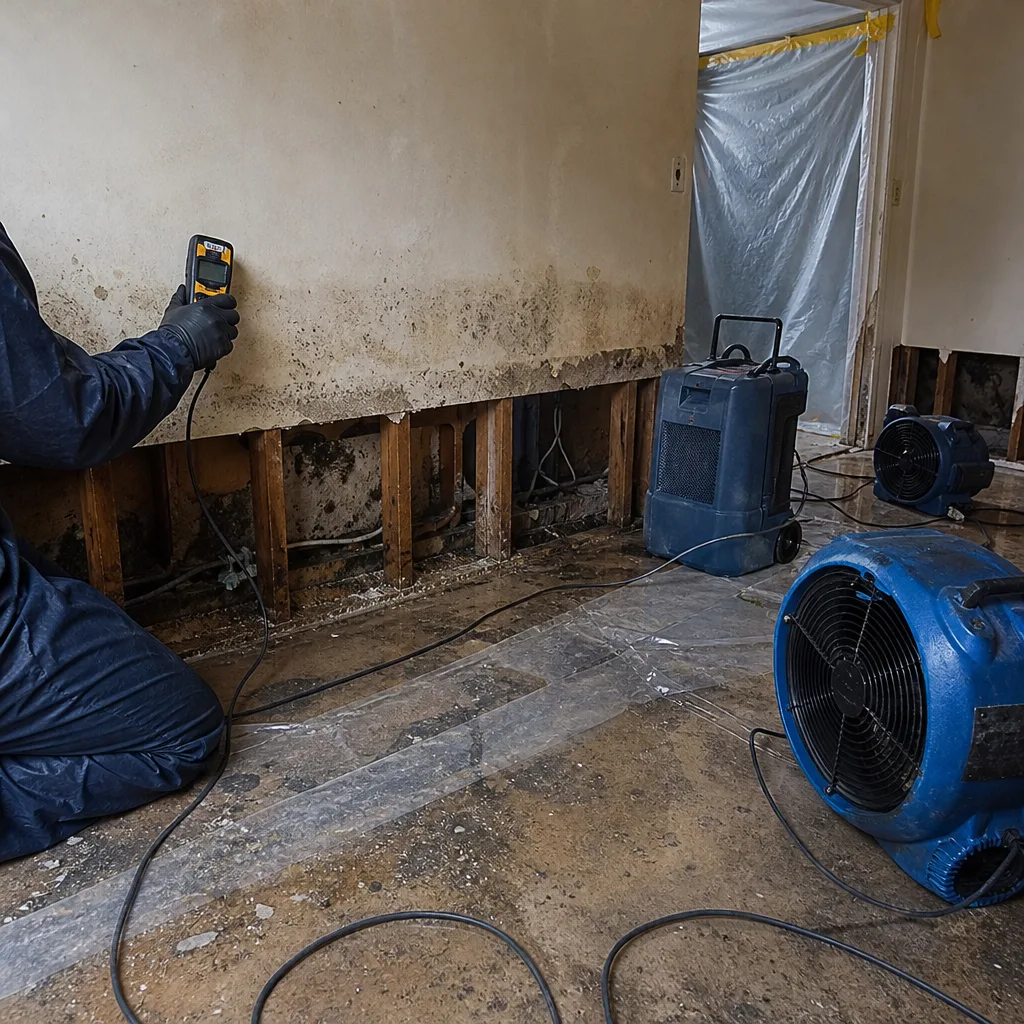 Before
 After
After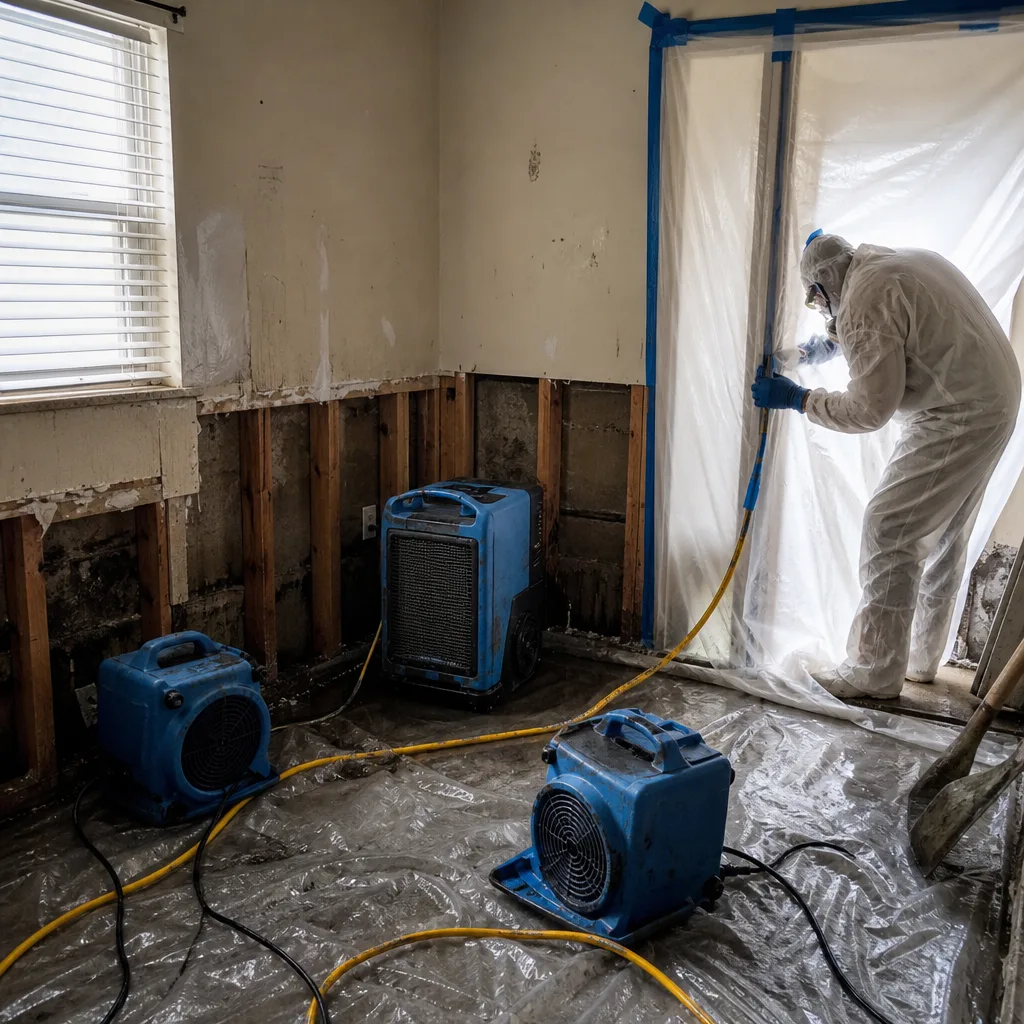 Before
 After
AfterWhen to Call a Professional
If you find standing water that covers more than a few square feet, if water has been running behind walls or under flooring for more than 24 hours, or if you can smell a musty odor that wasn’t there before, the maintenance window has closed and the mitigation window is open. Mold begins growing within 48 hours, and once it starts, the job moves from drying to remediation. If you see water staining on a ceiling below an upstairs bathroom or AC unit, there is water hiding in that ceiling cavity right now, and opening it up properly matters. If your home has polybutylene plumbing and you’ve found a leak, call a plumber the same day, not the same week. Marsh Water Damage Orlando home offers free estimates throughout the Orlando area, and we answer the phone with a live person whenever you call. That number is (850) 446-8938.
Frequently Asked Questions
Pour one cup of white vinegar down the drain line every 60 days during cooling season, which in Orlando runs roughly 10 months of the year. During the wettest months of July through September, check the line monthly and verify you can see water draining from the exterior exit point. If you can’t see drainage, the line is clogged. Call (850) 446-8938 if you’ve already had an overflow, because the water in your ceiling needs professional drying, not just a cleared drain line.
Look under any sink or behind any toilet for gray, flexible plastic pipe, usually marked with “PB2110” along the side. Polybutylene is most common in Orange, Seminole, and Osceola County homes built between 1978 and 1995. If you find it, the honest answer is that no maintenance routine will make it safe. The fittings fail unpredictably, and the smart move is a full repipe. Replacement typically costs $4,000 to $8,000, significantly less than the water damage claim that follows a fitting failure.
Interior drywall should read between 8 and 12 percent, exterior walls between 10 and 15 percent, and wood framing between 10 and 14 percent. Concrete slabs on the proper meter setting should read 4 to 6 percent. Take your own readings with a $30 pinless moisture meter on a dry day, write them down, and compare them monthly. Any reading that jumps 5 percentage points or more in a wall that should be dry means water is getting in somewhere.
Schedule it in April or early May, not June. Every roofer in the city is overwhelmed once hurricane season opens, and inspections get rushed. The failure points you’re looking for, cracked roof boots and failed sealant around AC penetrations, are already visible in April. Catching them then gives you time to fix them before the first tropical system of the season.
Coverage depends on your specific policy, but many Orlando homeowners insurance policies treat gradual damage from a clogged condensate line as a maintenance issue rather than a sudden event. This means the water damage might be denied or only partially covered. The best insurance answer is prevention: clean the line every 60 days, install a float switch, and if you do get water in the ceiling, document everything and call us at (850) 446-8938 for a thorough assessment.
Mold growth can begin within 48 to 72 hours in Orlando’s heat and humidity, which is faster than most homeowners expect. The combination of warm temperatures and high moisture creates ideal conditions for microbial growth. This is why the 24-hour window after a water event is so critical. The faster drying equipment is placed, the less likely you are to face a mold remediation project on top of the water restoration. If you’ve had water sitting for more than a day, professional drying is not optional.
The Bottom Line
The homes that flood in Orlando are not the homes that got unlucky. They’re the homes that had a maintenance debt that finally came due, sometimes years after it started accumulating. A clogged AC drain line, a cracked roof boot, a slab that slopes toward the house, a gray pipe that everyone ignored. None of these failures are random, and none of them happen without warning. The warning was always there. The checklist above is the difference between seeing it and missing it. Spend a few hours a year on these tasks, document everything, and when something does go wrong, which it eventually will in a climate like this, you’ll catch it on day one instead of day twenty-one. For more guides & resources, visit our blog.
Written by Tobias Reyner, Owner at Marsh Water Damage Orlando, serving Orlando since 2005.